When desire becomes one-sided
Let's be real. When your partner stops wanting sex and you still do, the loneliness inside the relationship hits different than being single. You're literally sleeping next to someone who used to touch you, and now they don't. That absence is a presence all its own.
Here's what I see in my practice constantly: one person is bewildered ("What changed?") and the other is defensive ("I'm just not interested anymore"). Neither person knows how to say the real thing, which is usually some version of "I feel disconnected from you" or "I don't know how to want this again." The sex part is real, but it's almost never just about sex.
The disconnect isn't actually about desire
When a partner suddenly loses interest in physical intimacy, people assume it's about attraction, erectile function, or hormones. Sometimes it is. But in most cases, it's about emotional safety that got damaged somewhere.
Maybe resentment built up over years and they don't even remember when it started. Maybe they felt pressured for years and now sex feels like a performance they failed at. Maybe work stress flattened them, and they withdrew, and their partner withdrew in response, and now the gap is too wide to see across.
The thing about mismatched desire is that it creates a feedback loop. The person who wants sex feels rejected, gets quieter or pushier, and the partner who's withdrawn feels even more pressured or guilty, so they pull further away. Rinse and repeat for months or years. Both people stop trying because trying feels like banging your head on a wall.
Why individual pleasure matters before couple's pleasure
This is the part most relationship advice gets wrong. People think reconnection means date night or couples therapy or trying harder in the bedroom together. Those things help, but not first.
First, you need to remember that pleasure exists for you alone. Not as a performance for your partner, not as a way to seduce them back, not as proof that you're still attractive. Just for you.
When a relationship becomes sexually disconnected, both partners often lose touch with their own bodies. The person with low desire stops exploring pleasure because they've labeled themselves as "not sexual." The person with higher desire stops exploring alone because it feels like a substitute or a betrayal. Both people become trapped.
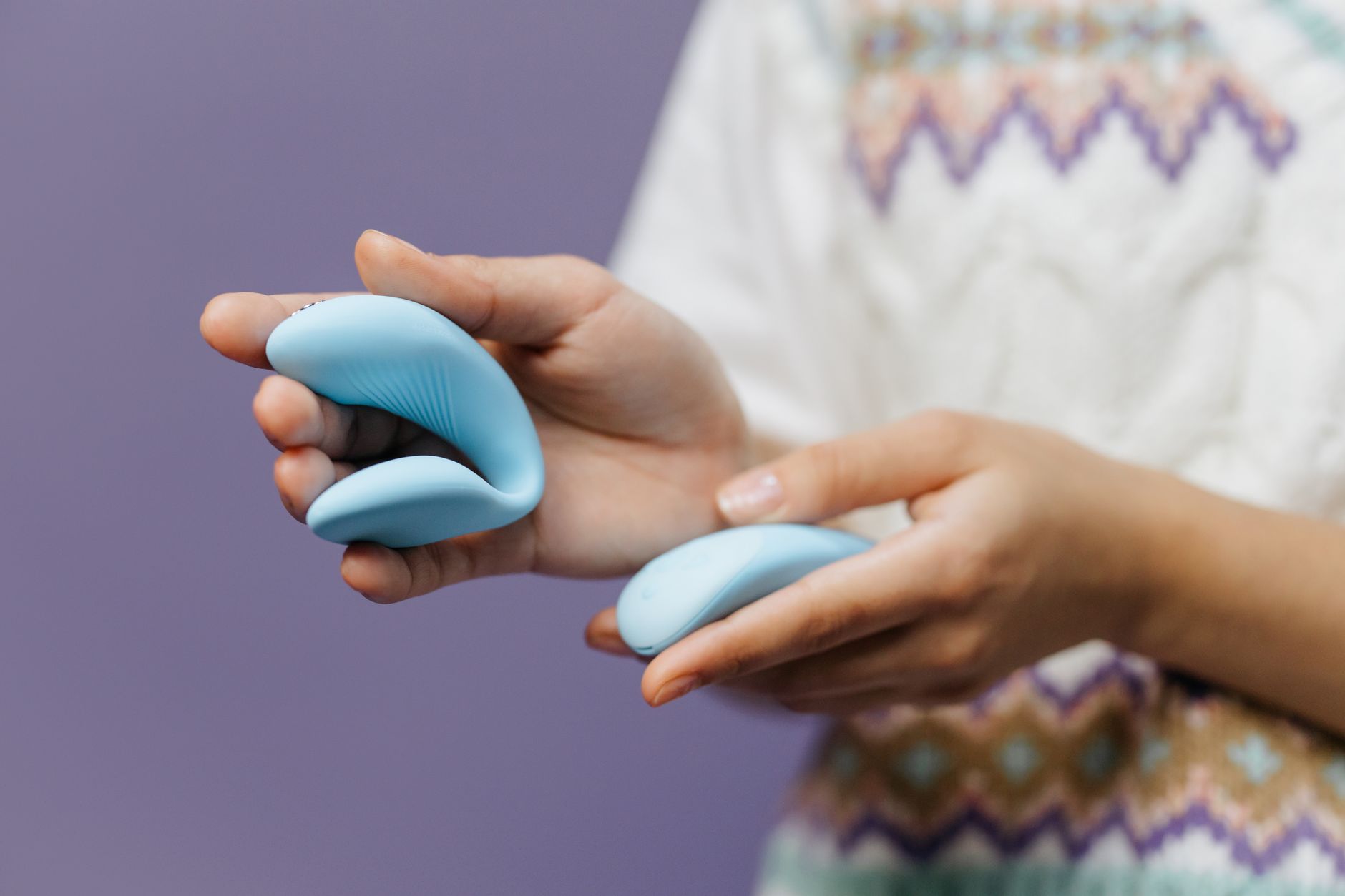
Using a clitoral vibrator like the Lem on your own is how you break that trap. Not to figure out how to perform better for your partner. Not to "fix" yourself. But to remember that your body is yours, and pleasure is a thing that can still happen to you, solo, without anyone's permission or participation.
What reconnection actually looks like
Once you've spent even a few weeks reconnecting with your own pleasure, something shifts. You become less desperate for your partner's desire and more grounded in your own. That sounds small, but it's the hinge that lets the door open.
From there, reconnection isn't about scheduling sex or creating the "right mood." It's about a completely different conversation. It's about sitting down and saying things like "I miss touching you" or "I think I've been avoiding this because I felt judged" or "I lost myself somewhere and I want to find my way back." Those conversations only happen when the stakes feel lower, and they only feel lower when you're not gasping for intimacy like it's oxygen.
Lemon vibrators, clitoral vibrators, and toys in general are sometimes what gives you that breathing room. Not because they replace your partner, but because they prove to you that pleasure didn't go anywhere. You just forgot where it lived.
The practical first steps
If you're in this situation, here's what I recommend:
First, explore solo. Set aside 15 to 20 minutes when you're alone. No pressure to orgasm, no agenda. Just reintroduce yourself to your body and what feels good. A clitoral vibrator helps because the sensation is usually different enough from your fingers that it breaks the autopilot. Try different patterns, different speeds. This is information gathering, not performance.
Then, don't tell your partner yet. I know that sounds counterintuitive, but part of why mismatched desire persists is because the low-desire partner feels watched and judged. If you suddenly mention you're using toys, they might interpret it as pressure ("Are you doing this to get me in the mood?") or judgment ("So you're replacing me"). Neither of those conversations helps.
Actually, wait a bit. Give yourself permission to just enjoy this privately for a while. Let your own pleasure return without it being tangled up in what's happening or not happening in your relationship.
Then, when it feels right, tell your partner the simple truth. Not "I've been using a vibrator to get ready for you" or "This will help us." Just "I've been taking some time to reconnect with myself and it's been helping. I wanted you to know." Then stop there. Don't oversell it.
Why some partners respond and some don't
Here's the hard part: sometimes a partner sees your reconnection to pleasure and something shifts in them. They remember why they were attracted to you in the first place. They feel the permission to relax because you're not desperate anymore. Things actually improve.
And sometimes, a partner sees it and becomes more withdrawn, or resentful, or it doesn't matter because the disconnection is too deep to repair without actual therapy.
Both outcomes are possible. Both are information.
If your partner responds positively, there's a path forward. If they don't, then you at least have reclaimed your own pleasure, and you have better information about whether this relationship is one you want to stay in. Either way, you're not stuck.
When to get help
If you've both been trying and nothing changes after a few months, a relationship therapist who specializes in intimacy work is worth the investment. Not because you're broken, but because mismatched desire is complicated and it benefits from a neutral third person who knows how to untangle it.
Some couples rediscover each other with good therapy. Some realize they've grown in different directions and need to make a different choice. Both are legitimate outcomes. The point is that you're not stuck indefinitely in the limbo of being touched by someone who doesn't want to touch you.
The thing about rebuilding
Reconnection after a sexual disconnect doesn't usually look like it did before. It might be slower, more intentional, sometimes less frequent. But it can also be deeper because it's chosen, not automatic. You're both more aware of what you're doing and why.
Start with yourself. Let your own pleasure come back first. Let your partner see that you're not waiting for them to fix you. That shift, small as it seems, is usually the thing that makes reconciliation possible. You deserve that. Your body deserves that.
Frequently asked questions
What if my partner thinks I'm using a vibrator as a replacement for them?
That conversation is usually code for "I feel insecure or guilty." You can say something like: "This isn't about replacing you. It's about remembering that my body can feel good, independent of what's happening between us. It helps me feel more connected to myself, which actually helps me feel more connected to you." Then let that sit. Don't over-explain or get defensive. Over-explaining usually feels like justification, which triggers more defensiveness.
Can lemon vibrators or clitoral vibrators actually help a struggling relationship?
Not directly. They can't fix communication problems or rebuild emotional trust by themselves. But they can help you reconnect to your own pleasure, which shifts your emotional state from desperate to grounded. That shift in you sometimes creates the space for things to change in the relationship. The vibrator is a tool for yourself, not a relationship hack.
How long should I wait before mentioning this to my partner?
There's no magic timeline. I usually suggest giving yourself at least a few weeks of solo exploration first. Let your own pleasure feel normalized and real to you before you bring it into the relationship context. If you tell your partner too soon, before you've even processed it yourself, it becomes about them instead of about you.
What if pleasure doesn't come back?
Sometimes numbness or disconnection runs deeper than a few weeks of vibrator use can reach. If after a month or so of regular exploration you still feel nothing, that's worth discussing with a therapist or your doctor. Sexual anhedonia (loss of pleasure) can be linked to depression, anxiety, medication side effects, or trauma. Getting professional support isn't failure. It's information.
Is it normal to feel guilty about pleasure when things are disconnected with my partner?
Completely normal. Guilt often shows up when one person in a couple is experiencing something the other isn't. But that guilt is usually rooted in the false idea that your pleasure is taking something away from them. It's not. Your pleasure is your own. Reclaiming it doesn't diminish them.
If my partner wants to get involved eventually, how do we do that?
Slowly. If your partner becomes curious about your exploration, start by just talking about what you've discovered without making it a sexual performance. Show them the device if they're interested. Let them try it on themselves if they want to. The key is that nothing is mandatory or staged. Curiosity comes first, integration comes later, if at all.