
How to Find the Right Lemon Vibrator When You Have Sensitive Skin
Let's be real: sensitive skin changes everything about pleasure. Not because you can't have it, but because the stuff most people never think about suddenly matters. The material of a vibrator, the lubricant you pair it with, the intensity level you start at, even the patterns you use. These aren't details for the overly cautious. They're the difference between genuinely great sensation and spending three hours dealing with irritation afterward.
Here's what I've seen work with hundreds of clients who have reactive, sensitive, or easily irritated vulvar skin.
The material question is non-negotiable
Your skin is the largest organ you have, and vulvar skin is thinner and more permeable than almost anywhere else on your body. That means what touches it matters differently.
The good news: not all vibrators are created equal. The lemon clitoral vibrator, for instance, is made from medical-grade silicone. That's the standard you want to look for. Medical-grade silicone is non-porous, doesn't leach chemicals, and doesn't harbor bacteria in microscopic grooves the way cheap plastic or rubber can.
Here's what to actively avoid if your skin is sensitive:
PVC and rubber. These materials contain plasticizers that can migrate into your skin and trigger inflammation. Even if you don't have an obvious allergy, repeated exposure can build sensitivity over time.
Jelly-like or squishy compounds. Soft doesn't mean safe. Jelly toys are notoriously unstable chemically and break down faster, shedding particles your sensitive skin can react to.
Painted or dyed finishes. If the color chips, the material underneath is often lower-grade silicone or plastic. Stick to toys that are colored all the way through the material itself.
Medical-grade silicone, ABS plastic (hard, smooth), and borosilicate glass are the three materials with the lowest irritation profiles. Silicone is the most popular for vibrators because it's flexible, durable, and genuinely body-safe.
Lubrication is your actual secret weapon
Here's something most people skip: people with sensitive skin often use less lubricant because they think it'll help them "feel" the vibrator better. It does the opposite. Lack of lubrication increases friction, which increases irritation.
Think of lubricant as a barrier between your sensitive skin and even the smoothest toy. It reduces mechanical stress.
For sensitive skin, water-based lubricants are the standard. But not all water-based lubes are equal. Some contain glycerin, which can feed yeast infections if you're prone to them. Some contain propylene glycol, which irritates reactive skin. Some are just thin and disappear fast.
If you have truly sensitive skin, look for lubes marketed specifically for sensitive skin or medical use. They're typically glycerin-free, paraben-free, and have minimal additives.
One more thing: apply lubricant generously and reapply as you go. Don't assume one coating is enough. If you're using a lemon vibrator, which uses suction combined with gentle pulsing, you don't need thick lube. Water-based works beautifully. But apply it every few minutes if needed.
Intensity settings are not a starting point
When you pick up a new vibrator, the instinct is to find the most intense setting and get going. With sensitive skin, reverse that logic entirely.
Start with the lowest intensity. Pattern 1 on a device like the Lem. Let yourself sit there for two to three minutes. Feel what's actually happening. Your nervous system will adapt upward. That's not you getting numb. That's your body acclimating in a safe way.
Many people with sensitive skin find that lower intensities actually feel better long-term than higher ones, partly because there's no irritation chasing the pleasure. You're not racing through arousal to the finish line while managing discomfort.
The suction-based technology in lemon clitoral vibrators is gentler on sensitive skin than traditional vibration because it's distributing pressure differently. The suction creates a seal and stimulates nerves through negative pressure rather than direct mechanical vibration. That difference matters if your skin flares easily.
Warming up matters more than usual
With sensitive skin, your tissues start more reactive. That means the classic advice about warming up before penetration? Double it.
I'm talking 10 to 15 minutes of non-genital touch before you bring any toy into the picture. Shoulders, inner arms, breasts, your partner if you have one. The idea is to get your nervous system calm and your blood flow directed toward arousal, not alert.
When you do introduce a lemon vibrator, start externally. The clitoral area can handle sensation better than the vaginal opening or vestibule, which have thinner, more reactive tissue. Let yourself build arousal through clitoral stimulation alone for the first few times. You'll know pretty quickly if a particular vibrator works for your skin without moving through more sensitive tissues.
Post-play care is preventive medicine
This is the part people almost always skip and then wonder why they're irritated the next day.
After you use a vibrator, rinse the toy with warm water. Then rinse yourself with warm water, gently. Don't use soap on your vulva itself (soap disrupts the pH and irritates sensitive skin), but you can use plain water.
If you shaved or waxed recently, hold off on vibrator use for a few days. Hair removal irritates skin temporarily, and adding vibration on top compounds the irritation.
Wear breathable underwear for the rest of the day. Cotton, linen, or merino. Let your skin breathe. Moisture plus synthetic fabric is a fast path to irritation.
If you notice any itching, burning, or unusual discharge in the hours after use, pause vibrator use for a few days and let your skin calm down. One irritation episode doesn't mean you can't ever use a vibrator. But you do need to figure out which part of the process is triggering it. Usually it's one of: material, lubricant, intensity, or timing of use relative to other activities.
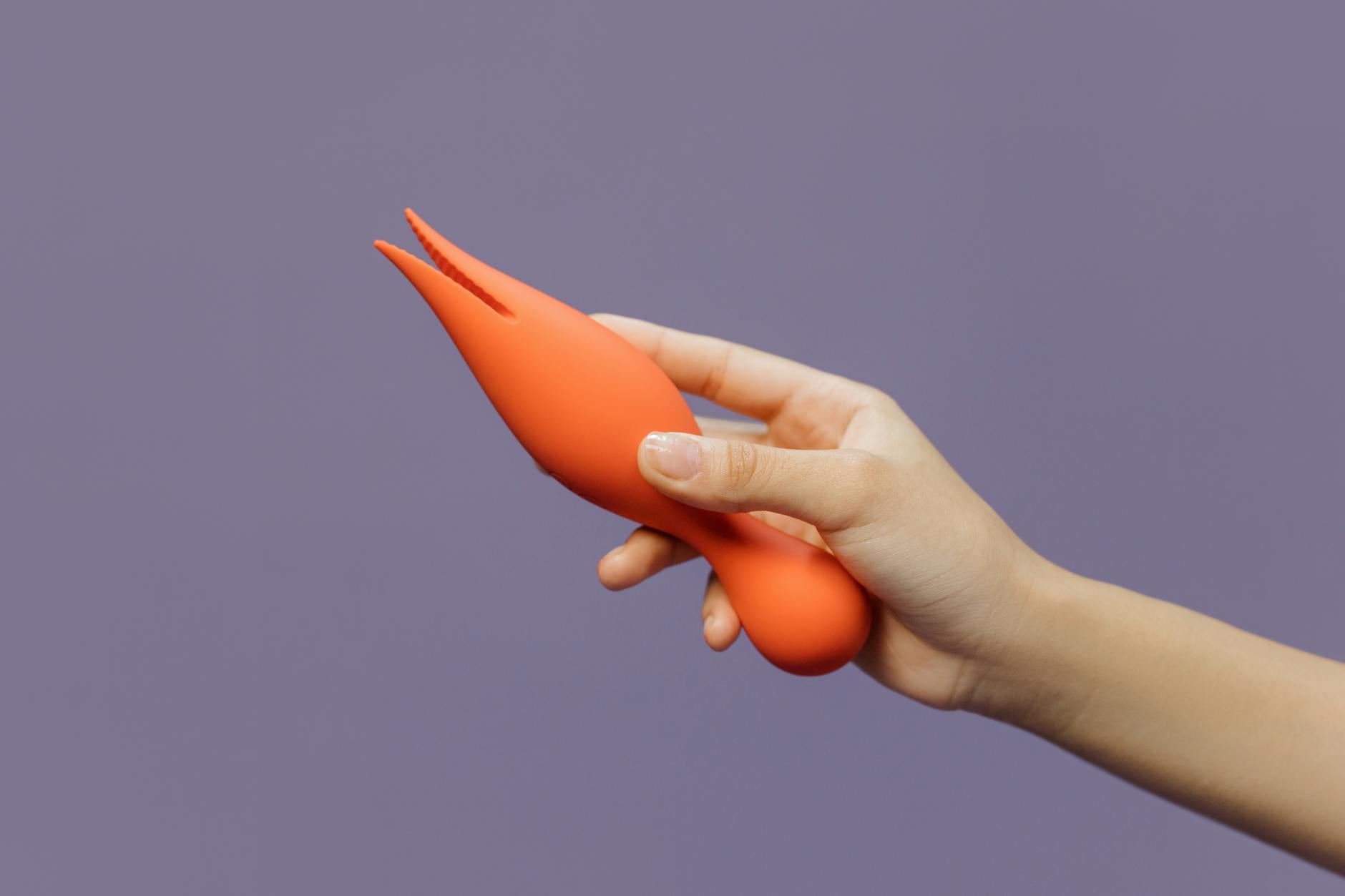
Photo by cottonbro studio on Pexels
When to choose suction over traditional vibration
Clitoral vibrators come in two main categories: ones that vibrate directly and ones that use suction. For sensitive skin, suction is often the better choice.
Suction vibrators create a seal over the clitoris and stimulate through gentle negative pressure combined with pulsing. Because the pressure is distributed over a slightly larger area rather than concentrated on one point, it tends to feel less irritating. Many people also find suction feels qualitatively different. More like an oral sensation, less like a direct buzzing.
Direct vibration can absolutely work for sensitive skin. But you need to be more careful about starting low, staying well-lubricated, and potentially limiting sessions to once every other day until you know how your skin responds.
A lemon vibrator uses suction technology specifically, which is one reason it's such a good fit for people with reactive skin.
What to check before you buy
If you're shopping for a clitoral vibrator and you have sensitive skin, ask these questions first.
What's the material? Medical-grade silicone, ABS plastic, or borosilicate glass. Nothing else.
Is it sealed and smooth? No seams, no ridges, no painted-on color that can chip. Run your finger over it. It should feel completely smooth, like a river stone.
How many intensity levels does it have? The more, the better. You want granular control so you can start incredibly low and creep upward.
Is there a pattern mode? Consistent pulse is easier on sensitive skin than random patterns. A predictable rhythm is less likely to trigger irritation.
Is it submersible or wipeable? You need to be able to clean it thoroughly. That matters for skin health.
Can you test it first? Some retailers have generous return policies. Use that. Buy it, test it with your body, return it if it doesn't work. No shame in that.
The nervous system piece nobody talks about
Here's something important: sensitive skin and a sensitive nervous system often show up together. If you startle easily, feel emotions intensely, or tend toward anxiety, your vulvar skin might be hyperaware of sensation. That's not a weakness. It's just how your nervous system is wired.
That nervous system awareness means you actually might benefit from a different approach to pleasure entirely. If you have pelvic floor tension alongside sensitive skin, read more about relaxing it during vibrator use. Tension and sensitivity often compound each other.
It also means that the context matters. Stress, poor sleep, dehydration, and even your cycle phase can make your skin more reactive. Plan vibrator use for times when you feel generally calm and well. Avoid it during high-stress periods if you can. That's not missing out. That's listening to your body.
Building confidence with a lemon vibrator
People with sensitive skin often become hypervigilant about their bodies. Every slight sensation triggers worry. That's reasonable given how reactive your skin is. But it can also kill pleasure.
The truth: most people with sensitive skin can use a quality lemon vibrator without issue if they're thoughtful about approach. Material matters. Lubrication matters. Starting low matters. Timing matters. But none of that is complicated.
Start with one session to observe. Not to achieve. Not to orgasm. Just to see how your body and this particular toy talk to each other. Most people find a rhythm that works pretty quickly once they stop treating vibrator use like a performance event and start treating it like a conversation with their own pleasure.
Your sensitive skin doesn't mean you get less pleasure. It means you get to be smarter about how you access it.
FAQ: Sensitive Skin and Lemon Vibrators
Can I use a lemon vibrator if I've had reactions to vibrators before?
Maybe, and here's why. Most reactions come from material, lubrication, or intensity. If you had a bad experience with a cheap rubber vibrator or a super-intense device, that doesn't mean all vibrators will trigger you. A medical-grade silicone lemon clitoral vibrator combined with quality water-based lube and low-intensity settings is a completely different experience. Start slow and see. If you react, you'll know within 24 hours. Then you can pause and troubleshoot which variable caused it.
What's the difference between a reaction and normal sensitivity?
Normal sensitivity feels like heightened sensation. Itching, tingling, strong feeling. A reaction feels like irritation. Burning, itching that doesn't go away, unusual discharge, redness that lasts hours. If you feel the former during or right after use, that's normal. If you feel the latter, your skin didn't like something about that session. Wait a few days and try a different variable next time (different lube, lower intensity, shorter session).
Should I use the same lubricant I'd use for penetration?
Not necessarily. Lubricants designed for penetration are sometimes thicker and might contain warming agents or glycerin. For external clitoral vibration with sensitive skin, you want the simplest, most inert lube you can find. Glycerin-free, paraben-free, fragrance-free. If it's marketed as "sensitive skin," it's probably a better choice than a general-purpose lube.
How often can I use a lemon vibrator if I have sensitive skin?
That depends on how reactive your skin is. Some people are fine using one every day. Others need a two or three-day gap between sessions. Your first month or two is a testing period. Use once, observe for 24-48 hours, and see how your skin feels. Once you know it tolerates the toy, you can build a rhythm. Many people with sensitive skin find every other day or twice-weekly use feels best because it prevents the irritation that sometimes comes from very frequent use.
Can I use a lemon vibrator if I have a yeast infection or bacterial vaginosis?
No. Wait until it clears. Your tissues are already inflamed and reactive, and adding vibration will make things worse. Once you're treated and symptoms are gone, wait a few days before reintroducing vibrator use. If you get recurrent infections, the culprit might be lubrication (glycerin), material (low-grade toys), or something about your post-use hygiene. A gynecologist can help you figure it out.
Is suction really gentler than vibration for sensitive skin?
For most people with sensitive skin, yes. The mechanism is different. Suction distributes pressure differently than direct vibration, which tends to feel less irritating. But everyone's different. You might find direct vibration from a low-intensity, high-quality vibrator works fine for you. That's why testing matters more than theory.
What should I do if I have a reaction while using a lemon vibrator?
Stop immediately. Remove the toy, rinse gently with water. Don't use anything else on the area for a few hours. If there's redness or itching, a cool (not cold) compress can help. Then wait 48 hours before touching the area with anything besides your hands and water. If redness or itching lasts more than a day or two, see a gynecologist. More often than not, reactions resolve quickly once you stop the irritating activity. Once your skin settles, identify what might have triggered it. Was it too much intensity? Not enough lube? A different brand of lube? Change one variable and try again.
Sensitive skin and pleasure aren't mutually exclusive. They just require a different approach. Material, lubrication, intensity, and timing all play a bigger role when your skin is reactive. But once you dial in what works, you often find that the pleasure is richer because you're not fighting irritation. If you want more specific guidance on how to use a clitoral vibrator with your unique body, reach out to us.