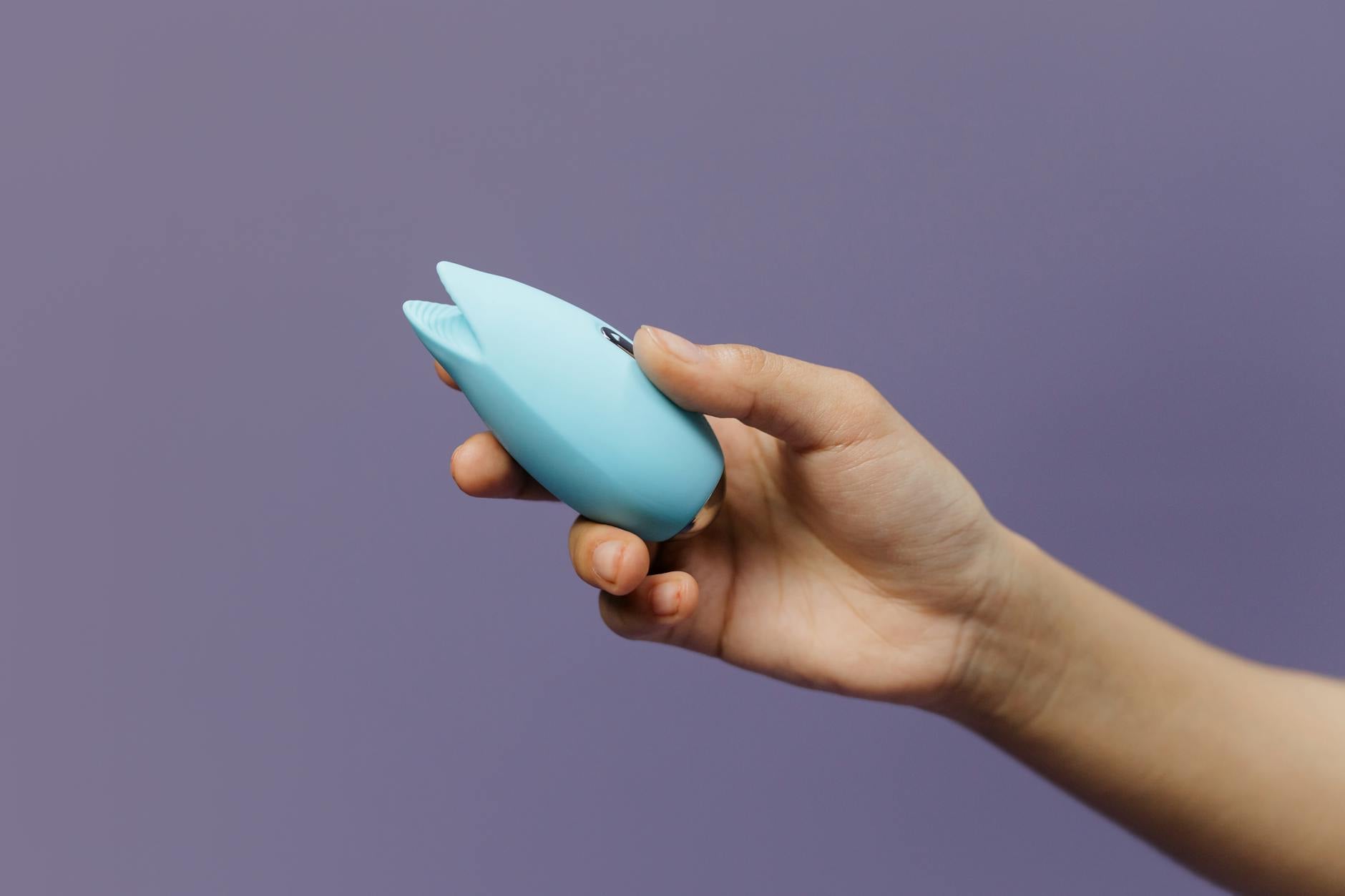
Here's the thing about introducing toys as a couple
It's not actually about the toy. The lemon vibrator, or any clitoral vibrator, is just the opening. What matters is what comes before you even unwrap it. The couples I work with who make this transition smoothly have one thing in common: they separated the conversation about "we want to try something new" from the conversation about "here's the specific thing." Most people skip straight to step two, which is where everything gets weird.
Let me walk you through how to do this so it actually feels like an adventure instead of a test.
The conversation starts way before the vibrator arrives
If you've never brought up the idea of using a lemon vibrator or any clitoral vibrator before, the opening doesn't sound like "I want to buy this thing." It sounds like curiosity. "I've been thinking about what would feel good for both of us" or "I read something about how vibrators can change things in a really positive way, what do you think?" You're not asking permission. You're inviting them into exploration.
The goal here is to separate desire from inadequacy. Your partner needs to hear that you're interested in a vibrator not because they're failing at something, but because pleasure is something you both want to maximize. That's fundamentally different than "I need this because you're not enough."
If they seem hesitant, don't push. Instead, ask why. Is it intimidation? A belief that toys make them less necessary? Confusion about how it would even work during sex? Each of those needs a different conversation. You're gathering information, not overcoming resistance.
Why lemon vibrators specifically work for couples
Lemon clitoral vibrators like those designed for external stimulation have a particular advantage when you're learning together. They're designed for precision, not penetration. That means they don't replace what a partner does. They enhance it. The suction or pulse pattern creates sensations that hands alone can't replicate, which feels collaborative rather than competitive.
The other advantage: they're intuitive. Unlike some adult toys, you don't need an instruction manual to figure out what you're doing. That matters when you're both feeling a little exposed.
The first time you actually use it together
Timing is everything. Pick a moment when you're already connected, already in that headspace. You don't want to go from zero to introducing a toy. You want to be in the middle of foreplay when one of you says "want to try it?" That way it feels organic instead of jarring.
When you first hand it over, low expectations are your friend. This isn't about achieving anything. It's about experiencing it together. Your partner holds it, maybe plays with the patterns while you're close to them. You're both just getting used to the sensation and the energy of it. No pressure for a specific outcome.
One of the best moments is when your partner realizes they actually enjoy watching you experience pleasure differently than before. That's when the resistance usually dissolves. It becomes less about the toy and more about intimacy.
Communication patterns that actually work
Before, during, and after matters. Before: "What are you curious about?" During: "How does that feel?" After: "I really liked when we..." and "Next time, maybe we could..."
This isn't clinical. It's just staying connected while you're exploring. Some couples find it helpful to establish a simple signal. Not a complicated safe word, just something like "slower" or "more" that keeps things responsive instead of static.
Avoid asking "does that feel good?" in a way that demands reassurance. Of course check in, but frame it as information gathering, not validation seeking. "What's different about how that feels?" opens dialogue. "Is this okay?" closes it because the answer is yes or no.
The integration phase is where most couples get stuck
You've tried it once or twice. Now what? The mistake is treating it like a novelty instead of integrating it as a regular part of your intimacy. That means sometimes using it solo, sometimes together, sometimes not at all. It just becomes another option in your toolkit.
This is also where how to introduce a lemon vibrator to your partner without making it awkward applies if the first conversation didn't land. You're not starting over, but you might be circling back to address something that felt off.
The rhythm you establish matters. Some couples use vibrators every time they're intimate. Others once a week. Others during specific moments when penetration isn't happening. There's no correct frequency. What matters is that it feels consensual and mutual, not obligatory or one-sided.
When one person is more excited than the other
This happens constantly. One partner has been curious about lemon clitoral vibrators for ages. The other is neutral or hesitant. That's workable, but it requires patience.
The person who's less interested needs to feel like they're participating in something that benefits both of you, not something they're doing as a favor. That's why the integration phase is so important. If it's only exciting when they're reluctant and you're pushing, it stays weird.
The best move is to use it alone first, or with them watching but not in the hot seat. Let them see you have pleasure independently. That often shifts the dynamic from "you want me to do this" to "oh, I can actually see how this is for you."
The stuff nobody talks about that actually matters
Logistics. Where do you store it? In a drawer where either of you can grab it, or hidden? Some couples prefer accessibility; others find that changes the vibe. Pick what matches your relationship.
Cleaning. Water-based lube is your friend here. Silicone lubes can damage silicone toys, so keep that in mind. Wash it before and after with warm water and mild soap, or use a toy cleaner if you have one.
Battery or charging. Is there a moment when you want to use it and the battery's dead? Annoying. Plan around that.
Noise. Some lemon vibrators are quieter than others. If you live with roommates or kids, that matters for your comfort level.
These details sound unsexy, but they're actually what make the experience feel integrated instead of performative. When logistics are smooth, you're not distracted by logistics.
When patterns feel repetitive or things plateau
After a while, the novelty of having a new sensation wears off. That's normal. This is where couples either drop the toy or evolve how they use it.
Some people like to switch up lemon vibrator patterns when sensation becomes routine, which keeps things fresh. Others incorporate it into specific scenarios. Some explore sensation play around it. The toy itself doesn't change, but your relationship to it does.
If things feel one-sided, circle back to communication. Maybe they actually want their own toy. Maybe they want to use it on you in a specific way. Maybe they want to take a break and come back to it later. All of these are fine. It's not about maintaining constant excitement. It's about staying connected while you're exploring.
The real win
The couples who do this best aren't the ones who have the most orgasms or use toys the most frequently. They're the ones who stay curious about each other's pleasure and keep talking about it. The lemon vibrator is just the vehicle for that conversation.
Your partner isn't threatened by a tool. They're engaged by a partner who cares enough about intimacy to keep showing up and adjusting. That's the actual shift that happens.
FAQ: First-time toy introduction as a couple
How do I know if my partner is actually comfortable or just pretending?
Look for genuine engagement, not just compliance. Are they asking questions? Making suggestions? Showing curiosity about how you feel? Or are they quiet and waiting for it to be over? You can also ask directly: "Does this feel like something you want to explore, or are you doing this for me?" The answer tells you everything. If they're just doing it as a favor, that's the issue to address before continuing.
What if my partner gets jealous or feels replaced by the toy?
That usually means the integration phase happened too fast or the framing wasn't right. Pull back. Go back to the basics of why you wanted to explore this together. Emphasize that vibrators don't replace partners. They're a different sensation, not a better one. Some couples find it helpful to have the partner hold or control the vibrator, which makes it collaborative instead of competitive. If jealousy persists, there might be other relationship stuff underneath that's worth exploring with a therapist or counselor.
Can we use the same lemon vibrator together, or does each person need their own?
You can absolutely share one, especially when you're starting out. Sharing can actually feel more intimate because you're both learning together and taking turns. As you get more comfortable, some couples eventually get separate toys so they can use them simultaneously. Neither approach is wrong. Start with sharing and see where it goes naturally.
How long should we wait before trying a toy together?
There's no timeline. Some couples introduce toys early in their relationship. Others do it after years together. What matters is that you both feel ready and curious, not pressured or experimental out of boredom. If you're doing it because your relationship feels stuck, that's a different conversation to have first. Toys enhance connection; they don't repair broken ones.
What if we try it and it doesn't work or feels awkward?
That's completely normal. Not every toy works for every body, and the first time often feels awkward because you're new to it. Give it a few tries before deciding it's not for you. Also pay attention to what specifically felt off. Was it the sensation? The dynamic? Communication? The timing? Once you know what didn't work, you can adjust. Sometimes that means a different toy. Sometimes it means a different approach to using the one you have.
How do I bring it up again if the first attempt went badly?
Don't immediately try to fix it. Give it time. Later, when you're not in a sexual moment, you can say something like "That felt a little awkward the first time. I'm still curious though. What would make it feel better for you?" You're inviting problem-solving, not defending the toy. Sometimes the answer is "let's try this differently" and sometimes it's "let's shelf this for now." Both are okay.