Here's the thing nobody says out loud
You can want sex and be in a relationship where your partner doesn't. Both things are true at the same time. And neither one makes you a bad person.
This is one of the loneliest positions to be in because it sits right at the intersection of desire and commitment. You love your partner. You want to stay. And you also want to feel pleasure. The guilt around wanting that third thing is real, and it's completely unnecessary.
Why desire mismatches happen (and they're more common than you think)
About 40% of long-term couples report significant differences in libido. That's not a failure. That's statistical reality. And it doesn't mean anyone is broken.
The reasons vary wildly. Your partner might be dealing with depression, medication side effects, work stress, or burnout. They might have lower baseline desire and always have. They might be dealing with intimacy concerns, past trauma, or low self-esteem. Or they might genuinely just not need sex the way you do. All of these are real. None of them mean you're supposed to stop wanting pleasure.
Here's what I see in my practice: couples who manage desire mismatches best are the ones who stop trying to synchronize and start communicating about what they each need. That usually includes solo pleasure. And it's almost always awkward to bring up the first time.
The guilt conversation (get this out of the way first)
Before you even think about using a lemon vibrator or any other tool, check in with yourself on why you might feel guilty. Most people in this situation carry one of these narratives:
"If I pleasure myself, I'm rejecting my partner." Nope. Self-pleasure is something you do for yourself. It's not a statement about your relationship.
"They'll feel bad if they know." Maybe. That's a conversation worth having. But you can't manage their emotions at the cost of your own wellbeing.
"Wanting sex when they don't means I'm oversexed." Again, nope. Wanting sex is not a character flaw. Wanting sex plus being in a committed relationship just means you're human.
"I should be able to wait." You can wait. The question is whether you want to, and for how long. Those are different things.
If you're going to explore solo pleasure, you need to do it from a place of self-advocacy, not apology. That mindset matters more than the toy itself.
When and how to have this conversation with your partner
Listen, I'm not going to tell you that using a clitoral vibrator secretly is wrong. People do it. But it's worth thinking about whether transparency serves your relationship better.
If you want to tell them, here's the framing that works:
Start with curiosity, not criticism. "I've been thinking about exploring solo pleasure. I want to do this for me, not because there's anything wrong with us." That's different from "You don't want sex enough, so I'm going solo."
Be specific about what you're doing and why. "I want to use a lemon vibrator sometimes because I like the way it feels." Not vague language like "I need to explore myself" (which can sound like code for "you're failing me").
Set a boundary around curiosity. "This is for me. I don't need you to participate unless you want to." Some partners will be curious. Some will be relieved. Some will feel threatened. Prepare yourself for any of those.
Name what doesn't change. "I still want us. This doesn't mean I'm looking to leave or that our sex life is over." Say it anyway.
If they react poorly, that's information too. And that might be worth exploring with a couples therapist.
Starting your solo practice when you feel awkward
Honestly, the first time is weird no matter what. You might feel self-conscious. You might feel like you're doing something wrong. You might feel disconnected from your body. All of that is normal.
Start simple. You don't need the fanciest lemon clitoral vibrator or the most expensive sexual toy in the world. A basic clitoral vibrator like the Lem works because it delivers consistent, predictable stimulation. You can focus on sensation instead of technique.
Pick a time when you won't feel rushed. Solo pleasure, especially when it's new, benefits from time. Give yourself at least 30 minutes. 15 minutes of that will be exploring, not orgasming. That's fine.
Start with no pressure to orgasm. Seriously. If you're already carrying guilt or self-consciousness, the added pressure of "I need to come" just layers more tension on top. Instead, explore what feels good. Notice your breath, your temperature, what patterns of stimulation you're drawn to.
Use a lube you like. Water-based works with most silicone vibrators. It also just feels better than dry stimulation. There's no moral high ground to taking longer or needing external help. Use the lube.
Notice what patterns work. Most people find that steady pressure builds pleasure better than constant variety. You'll probably start on a lower setting and gradually increase. Pay attention to that rhythm. That's useful data about your body.
Building a solo practice that actually lasts
Most people try it once, feel weird, and don't go back. If you want this to become something you actually enjoy, you need to normalize it the same way you'd normalize any other form of self-care.
That means: don't make it a big deal every time. It doesn't have to be a ritual with candles and intention-setting (though if that's your thing, great). Sometimes it's just "I'm going to spend 20 minutes with myself" the same way you'd take a walk or take a bath.
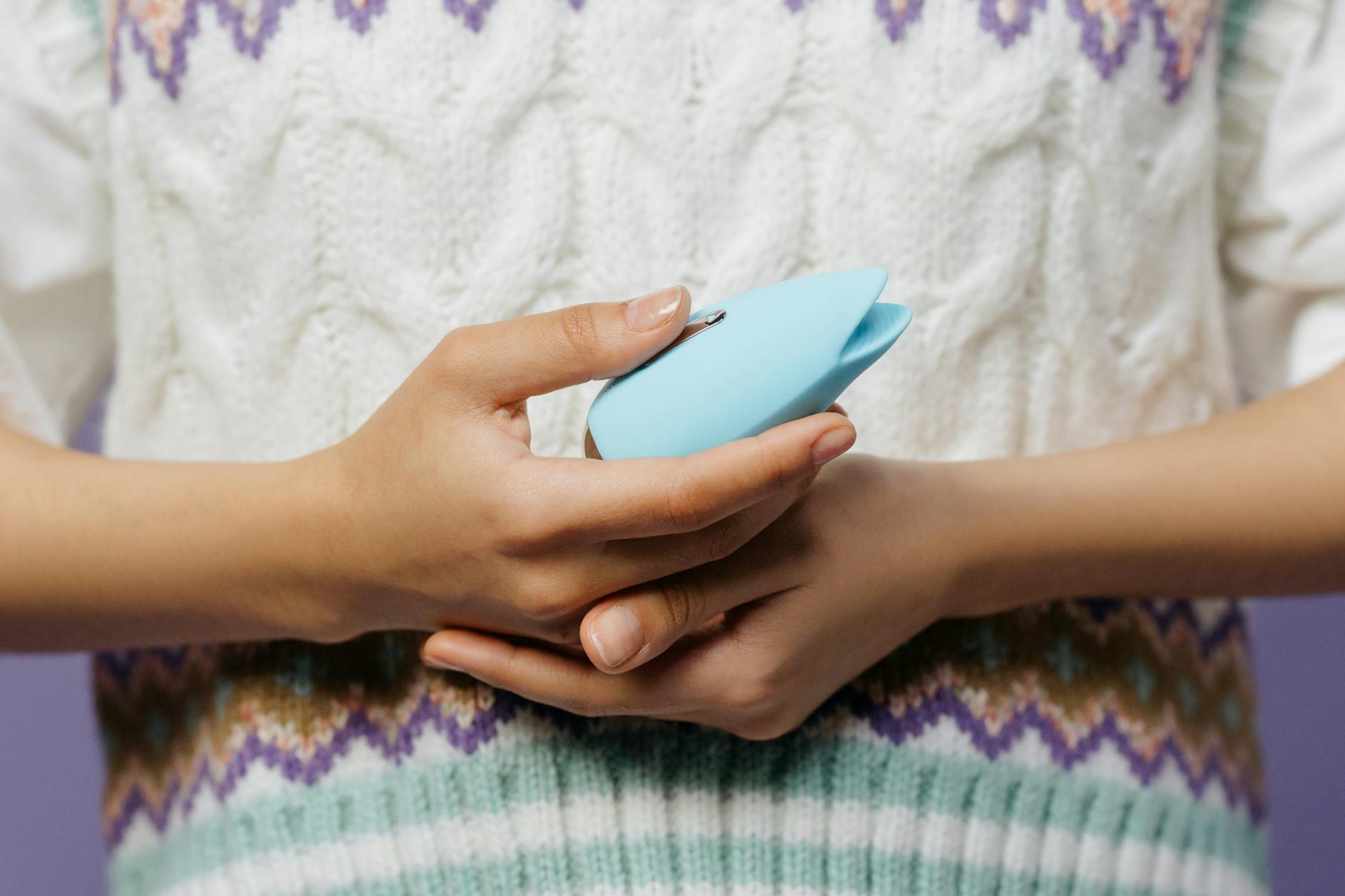
Photo by cottonbro studio on Pexels
Set a realistic frequency. Some people want weekly solo play. Some want monthly. There's no right answer. What matters is that it feels good and sustainable.
Keep your vibrator in a place you can access it easily. The more friction there is to getting to it (literally and logistically), the less likely you'll actually use it. Keep it on a nightstand, in a drawer you can open without feeling secretive. Normalize the object in your space.
How solo pleasure changes the relationship dynamic
This is the part nobody talks about, so let me say it: sometimes, regular solo pleasure actually improves the relationship.
Here's why. When you're not channeling all your sexual frustration into resentment about your partner's lack of interest, you show up differently. You're less angry. You're less desperate for connection. You're more likely to see your partner as a whole person instead of as "the person who isn't meeting my needs."
That doesn't fix the mismatch. But it makes it way less toxic.
For some couples, solo pleasure creates an opening for different conversations. Your partner sees that you're not going to resent them forever. They might become curious. They might offer to be in the room. They might offer different forms of intimacy that aren't penetrative or orgasm-focused. The door opens a little wider.
For other couples, it creates a situation where you're both getting what you need separately. And that's okay too.
When you're using a lemon vibrator when your partner wants more frequency than you do, the dynamic is reversed. But the principle is the same. Pleasure is individual. Relationships can hold that truth.
When to bring in professional help
If the desire mismatch is creating constant conflict, or if your partner is resistant to even discussing solo pleasure, that's worth exploring with a couples therapist. Sometimes this sits under something bigger. Resentment. Disconnection. Unprocessed conflict about other things entirely.
A good therapist can help you both figure out what the real issue is. (Spoiler: sometimes it's not actually about sex.)
If the mismatch is really extreme, some couples explore opening the relationship. Some prioritize non-penetrative intimacy. Some use a lemon clitoral vibrator as something they both engage with sometimes, as a bridge between their different desire levels. There's no one right answer. But there are lots of honest answers that don't involve you just suffering in silence.
The bigger picture: pleasure belongs to you
Using a vibrator when your partner isn't interested in sex isn't a consolation prize. It's not settling. It's not proof that your relationship is broken. It's you advocating for your own body and your own experience.
That matters. And it's worth doing, even when it feels awkward at first.
FAQ: Desire mismatches and solo exploration
What if my partner feels hurt that I'm using a vibrator without them?
That's a real possibility, and it's worth discussing. Some partners feel rejected by solo pleasure. But that's often about their own insecurity, not about you. You might say: "I'm doing this for myself, not instead of you. Your desires matter. So do mine." And then offer to talk about what they're actually worried about. Sometimes it's not about the vibrator at all.
Can using a lemon vibrator solo actually fix a desire mismatch?
No. It manages the impact of the mismatch on you, which is valuable. But fixing the actual mismatch usually requires conversation, sometimes therapy, and both people wanting something to change. Solo pleasure is a piece of that, not the whole answer.
Should I tell my partner I'm using a clitoral vibrator if they don't ask?
It depends on your relationship and your comfort level. If you're naturally transparent about other things, transparency here usually works. If you tend toward privacy, you don't owe someone a blow-by-blow of your solo time. But there's a difference between privacy and secrecy. If you feel like you're hiding something, that's usually worth exploring.
What if my partner wants to watch or participate sometimes?
Then you get to decide if that feels good to you. Some people love that. Some find it changes the experience in a way they don't like. Your body, your boundaries. Full stop.
Is it normal to orgasm easier alone than with a partner?
Completely normal. Alone, you know exactly what you like, you're not distracted by someone else's pleasure or performance, and you're not carrying emotional weight. That's why many people find solo play easier. It doesn't mean anything is wrong with you or your partner.
How often should I be using a vibrator if my partner isn't interested in sex?
As often as feels good. There's no frequency that's "too much." If it's interfering with your life or relationships, that's a different conversation. But regular solo pleasure is healthy. It's normal. Keep doing it.