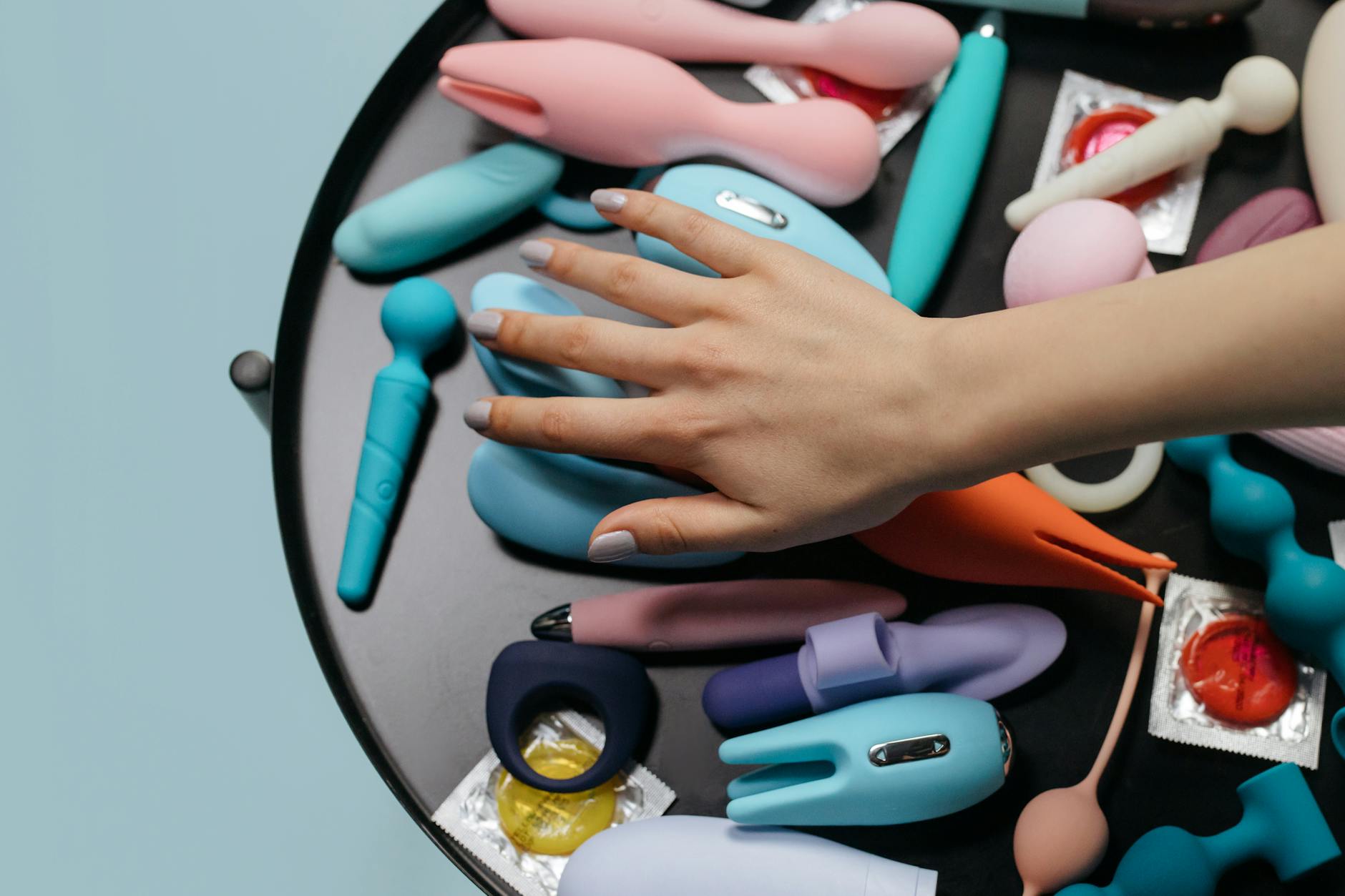
Here's what nobody tells you about long-term relationships and arousal
Arousal doesn't die in long-term relationships. It relocates. You stop reaching for it because the geography of desire has changed. The triggers that used to work straight through your nervous system now require a map. The person you've built a life with can become less like a partner and more like a roommate who happens to know your password.
This isn't failure. It's what happens when novelty, uncertainty, and physical space stop doing the work of keeping your body switched on. And it's fixable. But not by doing what you used to do harder.
Why arousal tanks after you've been together for years
Three things happen in long-term relationships that directly suppress arousal.
First, the nervous system stops being surprised. Arousal is partly a startle response. Your brain evolved to notice novelty, to register threat or opportunity. Once you've slept next to someone for five years, ten years, your brain sorts them into the "safe, known, file it away" category. That's good for trust. It's terrible for desire.
Second, you've built competing narratives. You know their stress patterns, their money worries, their mother's voice in their head. You've seen them sick, tired, frustrated. The erotic imagination has a harder time running when you're also running the household mental load, the emotional labor, the logistics of keeping two lives coordinated. Desire requires a bit of mystery. Logistics requires perfect transparency. You can't do both at full volume.
Third, physical touch becomes context-specific. Early on, touch is everywhere. A hand on your back while cooking means something. Later, that same hand means "I'm reaching around you to get the salt." Touch loses its erotic potential because it's been domesticated. And if sex is the only time you're aiming for something more charged, sex itself becomes freighted with expectation. No pressure.
All of this is neurobiological. None of it reflects how much you love your partner.
Why a lemon sucker does what conversation alone can't
Let's be direct. If you're hoping that your partner will suddenly become more exciting through willpower or date nights alone, you're asking the wrong nervous system to do the work. Your body doesn't care about effort. It responds to sensation.
A lemon vibrator, specifically a lemon clitoral vibrator like the Lem, creates a reset. Here's why it works when arousal has flatlined.
First, it bypasses the mental load. You don't have to perform desire. You don't have to wait for desire to arrive. The suction stimulation starts a response regardless of whether your brain is still running the grocery list or replaying your 2 p.m. meeting. Arousal begins in the body, not the mind. Once your body is lit up, your mind follows.
Second, it offers a completely different sensation than partner touch. Your partner's hands, fingers, the rhythm they've learned works for you over years. A lemon sexual toy creates novelty without requiring your partner to become a different person. You're not comparing them to someone else. You're just accessing a different channel on the same nervous system.
Third, it separates pleasure from performance. If sex has become transactional (his orgasm, your orgasm, done), a lemon clitoral vibrator can become the space where you're just... receiving. Not doing. Not performing. Not tracking whether your partner is into it. Just sensation for its own sake.
How to actually use a lemon vibrator when you're in a long-term relationship funk
There are two ways into this, depending on where you are with your partner.
Solo first. If your arousal is completely absent and you're not sure where to find it, start alone. A lemon vibrator in private gives you permission to build arousal without someone's expectations in the room. Spend 15-20 minutes on a pattern that works (usually pattern 1-3 on the Lem works best if you've been disconnected for a while, since higher intensities can feel jarring when your nervous system is dormant). Actual orgasm is not the goal. Sensation is. Rebuilding the neural pathway that says "this is a place I can feel good" is the whole project. Do this 3-4 times before moving to the next step.
Then with your partner, but not during sex. This sounds backward, but it's the key. Use your lemon vibrator while your partner is present and touching you, but not in a goal-oriented way. You're with them in bed, they're kissing your shoulder or your neck, and you're using the vibrator. The combination of their touch plus the vibrator plus the novelty of the situation usually creates enough stimulation to remind your body what arousal actually feels like. No pressure for sex to follow. The goal is to rebuild the sensation pathway together.
After a few rounds of that, arousal often transfers. Your brain starts to recognize "this context = pleasure is possible." And once that pattern is established, you can build back to partnered sex. But start here, not there.
What changes when you add physical novelty back
When I work with long-term couples, the shift usually happens in week two or three. Arousal returns, but it's different than it was at the start. It's less spontaneous. It requires more intention. And honestly? It's often deeper.
The couples who come through this usually report that sex becomes less frequent but more intentional. You're not having it because you think you should. You're having it because you remembered that you want to. And there's a huge difference.
Also, weirdly, using a lemon vibrator when arousal varies throughout your cycle helps normalize that your desire isn't binary. Some weeks your body is primed for sensation. Other weeks it takes longer to arrive. A lemon clitoral vibrator makes it easier to meet yourself where you actually are instead of where you think you should be.
The conversation piece nobody wants to have
If your arousal has flatlined and your partner doesn't notice or doesn't care, that's a separate conversation. You can rebuild sensation alone, but you can't rebuild desire in a relational vacuum.
This is where it gets honest. If your partner isn't willing to show up to this work. If they see your lowered libido as a personal rejection. If they're not willing to try something new. Then a lemon vibrator is a solution to a symptom, not the root problem.
But if your partner is willing to be curious. If they can separate "you don't want me right now" from "you don't want sex right now." If they're willing to sit with you while you rebuild arousal together. Then a lemon sexual toy becomes a bridge back to each other.
The difference is whether both of you are aiming for the same thing.
When this approach backfires (and what to do instead)
Sometimes a lemon vibrator doesn't help. Sometimes it highlights that the relationship problem isn't arousal. It's resentment, disconnection, or a partner who isn't invested in your pleasure.
If you're using a lemon clitoral vibrator and you feel worse afterward. If it highlights how much physical distance exists between you and your partner. If your partner interprets it as a criticism. Then you need a different kind of help. A therapist, not a vibrator.
That's not a failure. That's useful information. It means the work that needs doing is emotional, not physical. And that work usually requires someone trained to help both of you get there.
FAQ
How often should I use a lemon vibrator if we haven't had sex in months?
Start with 3-4 times per week, solo, for 2-3 weeks. Then add your partner in the room (but not as penetration). The goal is rebuilding sensation, not maintaining a schedule. Once arousal starts returning, you can back off to whatever frequency feels natural.
Can using a lemon vibrator make my partner feel insecure?
It can, if your partner thinks it means you don't want them. Which is why you have to name it clearly. "I'm using this to rebuild how my body responds to pleasure. I want us to do this together." If a lemon sexual toy becomes the thing that helps you reconnect, most partners actually feel relief, not threatened.
Do I need to tell my partner I'm using a lemon clitoral vibrator?
Depends on your relationship. If you're aiming to rebuild arousal together, yes. If you're using it solo to figure out what your body wants first, that's yours. But the longer you keep it secret, the more shame gets attached. And shame is the real arousal killer.
What if my lemon vibrator feels too intense after being disconnected for so long?
Start on pattern 1. Seriously. If even that feels too much, you might be dissociating (checking out emotionally). That's also useful information. It means the work isn't primarily physical. Give yourself permission to sit with that before jumping to sensation.
How long does it take for arousal to actually return?
Two to four weeks if both partners are on board. Six to eight weeks if you're starting solo and building back carefully. Much longer if the relationship problem is larger than arousal. And potentially never if the partnership isn't fundamentally healthy. A lemon vibrator doesn't fix relational damage. It just helps with the physical piece.
Can I use a lemon vibrator if we're already having regular sex but it feels disconnected?
Absolutely. In fact, that's exactly when it works best. When you and your partner have different pleasure timelines, adding a lemon sucker into partnered sex often helps because it removes the pressure for your body to respond on someone else's timeline.
The bottom line
Arousal doesn't vanish from long-term relationships. It goes dormant. And dormancy is usually fixable, if you're willing to approach it with intention and honesty.
A lemon clitoral vibrator is one tool for that. Not the only tool, and not always enough. But if the relationship is solid, if both partners are willing, and if you're patient with your nervous system while it remembers how to be turned on by the person you chose. Then yes. A simple lemon vibrator can be the permission slip your body needs to feel alive again.