
Let's name what's actually happening
Honestly, age gaps and generational differences shape how we experience pleasure in ways most couples never talk about. When one partner grew up in an era where vibrators were whispered about and the other came of age in a sex-positive Instagram landscape, you're not just bridging an age gap. You're bridging two completely different sexual cultures. That's actually significant.
Here's what I see most often: the younger partner assumes the older one is repressed. The older partner assumes the younger one is careless or hypersexualized. Neither is true. They just learned desire in different contexts. A lemon clitoral vibrator, used thoughtfully, can help translate.
The generational splits that actually matter
Let's get specific. Someone who came of age in the 1980s or 1990s learned that pleasure was private, slightly shameful, and definitely not something you discussed with a partner. The vocabulary didn't exist. Toys were something you hid. Sex was something that happened, not something you actively created or communicated about.
Someone who came of age after 2010 often grew up with explicit sex education, podcasts about pleasure, and the assumption that talking about what you want is basic relationship health. Toys are just tools. Discussion is expected.
These aren't personality differences. These are learned frameworks about safety, shame, and communication. When you're in a relationship spanning that gap, those frameworks collide. And here's the thing: neither one is wrong. They're just different operating systems.
The mistake most couples make is assuming the difference is about desire itself. It's not. It's about permission.
Why a lemon vibrator becomes a bridge tool
A lemon clitoral vibrator is useful here because it's tactile and neutral. You're not arguing about values or shame. You're exploring sensation together. The toy does the talking while you both relax.
For the partner who grew up with shame around pleasure: a lemon vibrator makes the experience feel less about transgression and more about curiosity. You're trying something together. It's an experiment, not a confession. That reframes the whole thing.
For the partner raised on openness: using a lemon vibrator with someone older can be an act of profound respect. You're meeting them where they are instead of where you assume they should be. That's intimacy.
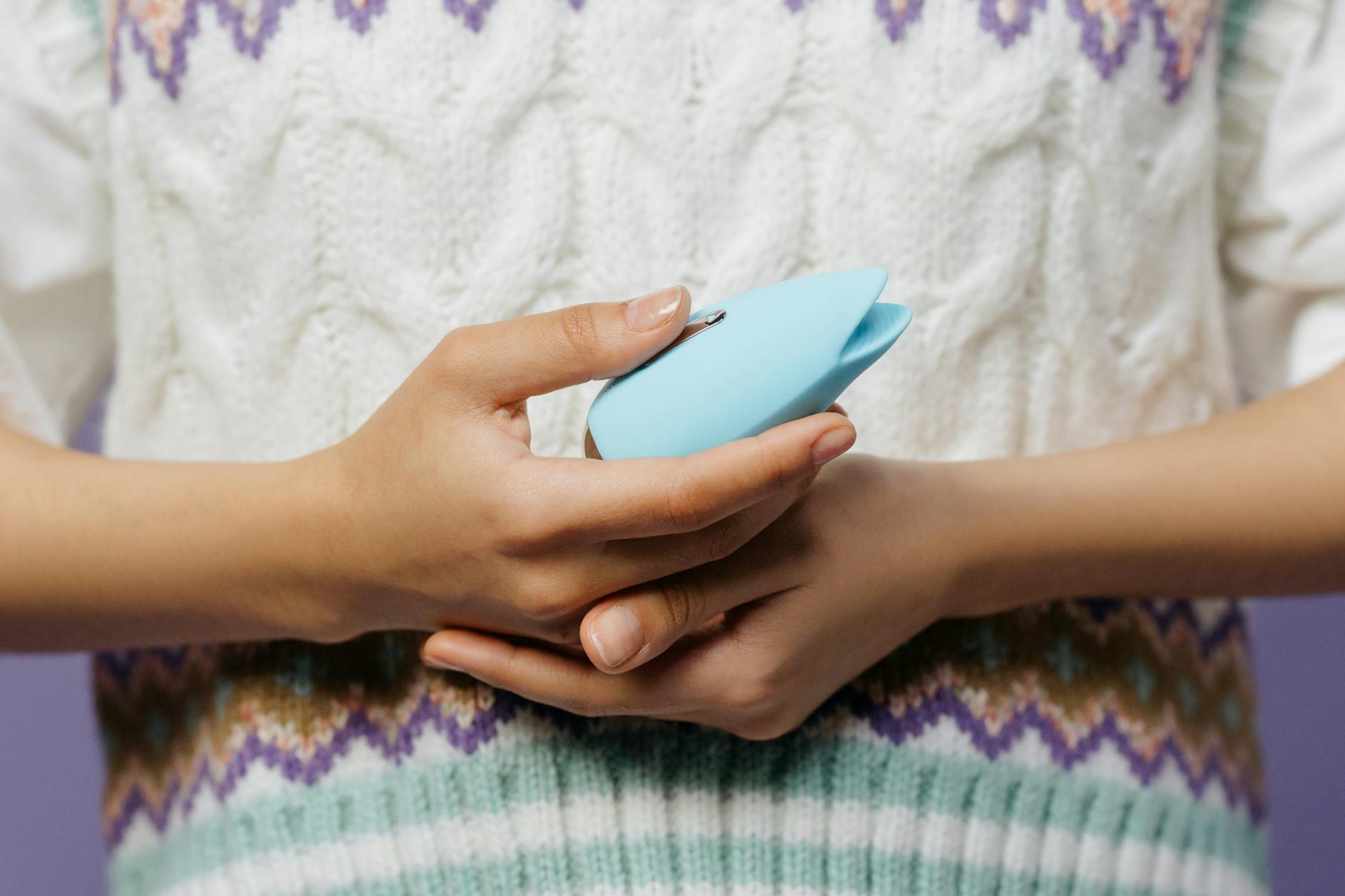
Photo by cottonbro studio on Pexels
The actual conversation to have first
Before you bring a lemon vibrator into the bedroom, have the cultural conversation. Not the sex conversation. The culture conversation.
Ask your partner: What were you taught about pleasure as a kid? What was normal in your family? What did you learn about desire from your friends, from media, from the world around you? Not as criticism. As curiosity. You're learning their sexual operating system, not interrogating their past.
Then share your own. This isn't a blame conversation. It's a translation conversation. You're learning why your partner reacts to pleasure, to toys, to direct conversation the way they do.
Here's what often emerges: the older partner wasn't actually less interested in pleasure. They were more interested in discretion. The younger partner wasn't trying to be careless. They were trying to be honest. Once you see that, everything shifts.
How to introduce a lemon clitoral vibrator across the gap
Three principles:
Start with low stakes. Don't make it about mutual pleasure yet. Make it about exploration. "I want to try this with you and I'm curious how it feels. Would you be willing to just... see what happens?" That removes the performance pressure, which is often higher for the partner who learned that pleasure was something you did alone and quietly.
Hand over control. Let your older partner hold the lemon vibrator first. Let them choose the pattern, the intensity, the timing. Control softens shame because it removes the feeling of being acted upon. This matters more than most couples realize.
Separate it from sex. Use the lem vibrator during non-sexual time first. While you're talking, while you're in the bath, while you're just lying around. This decouples it from performance and orgasm, which is especially important if your older partner learned that sex had to go a certain direction and end a certain way.
What generational differences look like in arousal patterns
Someone who grew up without sex-positive vocabulary often has a much slower pathway to arousal because they had to learn pleasure in isolation, without external input. They built their arousal from internal fantasy only. When a partner is present, especially if that partner represents a different sexual culture, arousal can actually slow down further because shame or discomfort gets activated.
Someone raised with openness often has a faster, more direct arousal response because external input was normalized. A lemon vibrator, instructions, conversation about pleasure. These feel like foreplay, not friction.
When you understand this, you can actually use it. The older partner might benefit from much longer warm-up time and lighter initial intensity on the lem vibrator. They're not broken. They're following a learned pattern of slow, private arousal. A lemon clitoral vibrator can help extend that pattern into partnership without shame.
The communication shift that changes everything
Here's what I notice after two decades of couples work: when you use a toy like a lemon vibrator to have a conversation that's been too vulnerable to have with words, something unlocks.
You're both focused on the toy, not on each other's faces. That removes some of the exposure. You're experimenting, not performing. You're curious, not critical. And very slowly, the partner who learned shame can start to learn that pleasure in the presence of another person is actually safe.
Then something wild happens. That older partner often becomes the more adventurous one. Why? Because they're experiencing pleasure without the baggage of having to perform it. They're learning it for the first time in a context of genuine safety.
The younger partner, meanwhile, learns that going slower isn't repression. It's intimacy. It's respect. It's another way to build connection.
You're both learning each other's sexual culture, and you're both changing as a result.
When to bring in actual conversation
Once you've spent a few weeks exploring a lemon vibrator together, the actual talking gets easier. You've already moved past the barrier. You've already said "yes" to pleasure with each other.
Then you can ask the harder questions. What patterns from your past do you still carry? What would make you feel safer? What do you actually want, not what you think you should want?
You might find that the age gap, which felt like an obstacle, becomes a resource. The older partner brings history and patience. The younger partner brings permission and enthusiasm. A lemon clitoral vibrator becomes a symbol of that collaboration, not a source of tension.
The thing most couples miss
Generational differences aren't a problem to solve. They're information to understand. When you use that information thoughtfully, adding a tool like a lemon vibrator, you're not bridging a gap. You're building something that contains both of you.
Your partner didn't grow up wrong. They grew up in a different time. Your pleasure isn't something you need to teach them to want. It's something you get to learn together, slowly, with curiosity instead of pressure.
A lemon vibrator is just plastic and sound. What it actually is in your relationship is permission. Permission to be different. Permission to learn. Permission to want something together that you might never have wanted alone.
People also ask
Can a younger partner use a lemon vibrator alone before introducing it to an older partner?
Absolutely, and honestly it's helpful context. When you use a lemon clitoral vibrator solo first, you understand what it does and doesn't do. You have an answer when your partner asks what it feels like. You're not discovering it for the first time together while also managing their potential discomfort. That's actually thoughtful. Just don't frame it as "I tried this and you need to too." Frame it as "I tried this and I wanted to explore it with you."
What if my older partner thinks using a lemon vibrator means I'm not attracted to them?
This is the core fear and it's worth naming directly. Say it out loud: "Using a lemon vibrator with you has nothing to do with my attraction to you. It has to do with exploring sensation together, with learning what feels good for you, with us building something new." Then follow through. Use the lem vibrator as part of partnered pleasure, not as a replacement. Let them feel your hands, your attention, your desire alongside the toy.
How do I bring this up without sounding like I'm criticizing how they experience pleasure?
Lead with curiosity about them, not criticism. "I've been thinking about how we learned about pleasure so differently. I'm curious what that was like for you." Then listen. Only after that conversation has happened can you introduce a tool. And frame it as something you both get to try, not something you need them to try.
Can age gaps affect orgasm intensity with a lemon clitoral vibrator?
Indirectly, yes. Someone who grew up with shame around pleasure might take longer to fully relax into orgasm, especially with a partner present. That's not a physical issue. That's a nervous system issue. A lemon vibrator helps because it removes some of the pressure to perform. The younger partner can also help by making it clear that intensity doesn't matter. Pleasure matters. Connection matters. The orgasm is secondary.
What if my younger partner thinks I should want pleasure more than I do?
Tell them directly: "I experience desire differently than you do. That's not less than. It's different. And I'm willing to explore with you, but I need to go at my pace." Then actually go at your pace. A lemon vibrator should feel like something you're curious about, not something you're pressured into. If you're feeling obligated, pause. Talk. Recalibrate. Your partner's generational optimism about pleasure is great. Your actual comfort is what matters.
Does using a lemon sexual toy together help with emotional intimacy?
Massively, if you approach it right. You're literally saying to your partner, "I trust you with something vulnerable." That's intimacy. You're both being curious instead of certain. You're both learning. That shared not-knowing creates connection. After a few sessions with a lemon adult toy, most couples report feeling closer in general, not just sexually. Because you've practiced being vulnerable together.
Want to explore this further? Let's talk about what pleasure and partnership actually look like for you. Get in touch with us.
References and sources
Gottman, J. M., & Silver, N. (2015). The seven principles for making marriage work: A practical guide from the country's foremost relationship expert. Harmony.
Perel, E. (2006). Mating in captivity: Unlocking erotic intelligence. HarperCollins.
Taormino, C. (2018). The ultimate guide to sex and disability: For all of us who live with chronic illness, pain, and disability (3rd ed.). Cleis Press.