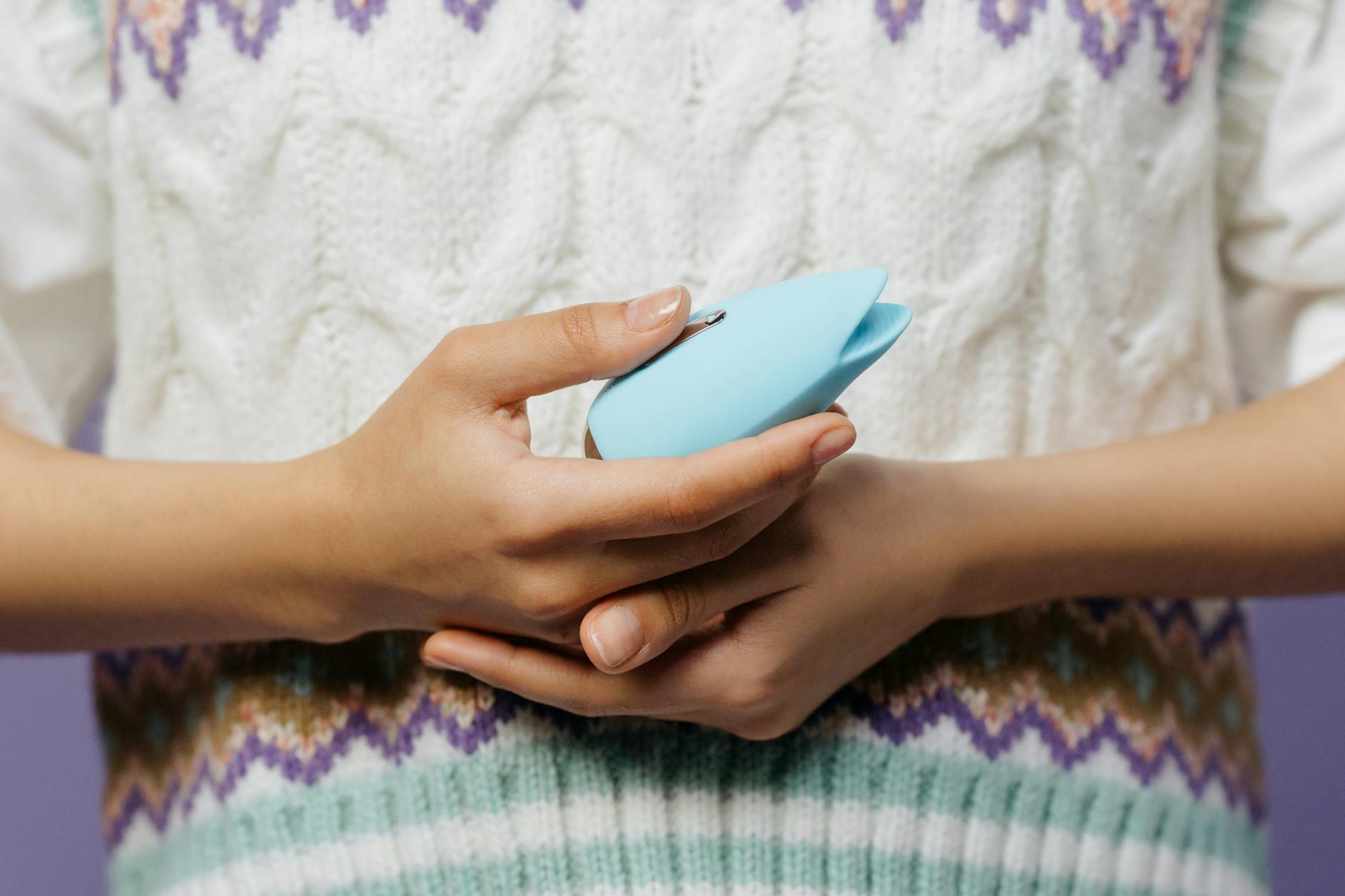
When a partner's presence becomes the problem
Here's the thing about orgasms and an audience: your nervous system doesn't want one. It wants safety. The moment someone else is in the room, your brain shifts into a different mode, and for a lot of people, that mode is locked on "don't mess this up." Not exactly arousing.
You're not broken. You're not selfish for needing solo time to come. This is a completely normal response to performance pressure, and it's one of the most common reasons people reach for lemon vibrators, lemon clitoral vibrators, and other adult toys when the stakes feel high.
I work with couples all the time where one partner can orgasm alone but freezes when their partner is present. The paradox is painful: you love them, you want them, but your body won't cooperate. And then the shame kicks in, which makes the anxiety worse, which makes orgasms even less likely. The cycle feeds itself.
Let's break it.
Why your nervous system sabotages you
When you're alone, your parasympathetic nervous system can relax. Blood flow increases. Neural pathways for pleasure light up. You know your rhythm, your pressure, your timing. There's zero judgment.
With a partner watching, your sympathetic nervous system activates. This is your threat-detection system. Suddenly you're hyperaware of your breathing, your sounds, your body shape, how long it's taking. You're monitoring their expression instead of feeling your own sensations. That mental load shuts down arousal faster than anything.
Add in cultural messaging that says orgasms should be easy, spontaneous, and definitely not require a toy, and now you're also fighting shame on top of the anxiety. That's a neurological perfect storm.
The lemon sucker vibrators (like the Lem) actually address this because they give your brain something new to focus on. The suction sensation is unfamiliar enough that it interrupts the anxiety spiral. You're processing novelty instead of performance pressure.
The framework that actually works
Here's what I recommend to couples stuck in this pattern:
Phase 1: Reclaim solo pleasure first. Spend 2-3 weeks using your lemon clitoral vibrator alone, no partner around. Notice your settings, your rhythm, what gets you there. This rebuilds the neural pathway that says "I can come" without external witnesses. Use whatever lemon sexual toys or tools help. Your body needs to remember competence before you invite someone else into the room.
Phase 2: Introduce presence gradually. Your partner doesn't watch yet. They're in the room doing something else. Reading, on their phone, just existing nearby. This trains your nervous system that their presence doesn't have to mean performance. Many people can come with this setup right away because the pressure is off.
Phase 3: Soft eye contact. Once you can come with them nearby, add gentle eye contact. Not staring. Just connection. If it breaks your concentration, look away. Your pleasure matters more than appearing composed.
Phase 4: Guided exploration. Now they can gently touch you while you use your lemon vibrator. Not directing you. Just participating. They might touch your arm, your thigh, your chest. Their job is to be present, not to fix anything.
I mention lemon vibrators specifically because they work beautifully for this progression. The clitoral suction sensation is intense enough to override anxiety but not so overwhelming that you lose focus. You can use them across all four phases without switching tools.
What to tell your partner (and what not to)
The conversation matters as much as the mechanics. Don't frame this as "I can't come when you're here." That lands like criticism. Instead: "My body responds better to the lemon vibrator alone first. Once I know what works for me, I want to show you. Can we take that journey together?"
Your partner's job is not to make you come. That's not a reasonable ask and it puts massive pressure on both of you. Their job is to be present, curious, and patient. If they need reassurance that this isn't about them or their technique, give it. If they ask to participate, tell them what helps. Maybe it's "I need quiet focus while I use this." Maybe it's "I love when you hold me." Be specific.
The partner's silent presence watching often backfires because it makes the orgasm feel like the goal instead of pleasure feeling like the goal. Reframe it together: we're exploring what helps you feel good. The orgasm might come. It might not. Both are fine.
Why lemon adult toys work better than willpower
Willpower can't override a threat response. Your nervous system doesn't care about your good intentions. But novelty, sensation, and unfamiliar stimulation can actually interrupt the anxiety loop. That's why introducing a lemon vibrator or lemon clitoral vibrator at the exact moment you're trying to shift the pattern helps. Your brain is busy processing the sensation instead of running the fear script.
Start at the lowest setting. You're not chasing intensity. You're practicing the skill of coming in a new context. Intensity comes later when the anxiety is already lower.
The timeline you need to know
Don't expect this to flip in one session. Rewiring a nervous system response takes weeks, sometimes months. You've probably been unable to come with a partner present for a while, which means your brain has a lot of practice at the anxiety response. You're teaching it a new pattern. That takes repetition.
Most people see real progress in 4-6 weeks if they're consistent. Some take longer. Some unlock it in phase 2. There's no timeline that means you're failing.
When to bring in professional support
If you've been trying this for two months and nothing shifts, or if the shame around this is affecting your relationship in other ways, talk to a therapist who specializes in sex and relationships. Sometimes performance anxiety is also connected to childhood messages about your body, past relationship trauma, or medical issues like depression or hormonal changes. A professional can untangle what's actually going on.
You're not the only person experiencing this. It's wildly common, completely treatable, and doesn't mean anything is wrong with you or your relationship.
FAQ: When pleasure and performance collide
Q: Does using a lemon vibrator mean my partner feels inadequate?
Not unless you frame it that way. A lemon clitoral vibrator is a tool, not a replacement. It's like saying a vibrator makes a partner feel bad the same way a pillow under your hips makes them feel bad. You're adjusting the mechanics to help your body work. Partners who understand this actually feel relieved. They were probably stressed that they couldn't make you come. Now there's a practical solution that has nothing to do with their technique.
Q: What if I'm worried my partner will judge me for needing this?
That's worth naming directly. "I want to try something that might help me relax. I'm worried you might think it means something negative about our connection. I need to know you're supportive before we try." If they react with judgment, that's information about them, not about you. Your pleasure deserves support.
Q: Can I come with a partner if I start using lemon sexual toys now?
Maybe. Some people need the lemon vibrator for solo pleasure and then graduate to partnered sex without it. Others always use it with a partner and that's completely fine. There's no finish line where you stop needing tools. If something helps you feel good, that's the goal. Not proving you can do it without help.
Q: How long should I use the lemon sucker vibrator during partnered sex?
As long as it feels good. Some people use it the whole time. Some use it to get close and then switch to partnered stimulation. Some use it at the beginning and then move to other touch. Your pleasure isn't on a timer. Let it unfold naturally.
Q: What if my partner wants to use the lemon clitoral vibrator on me?
That's a great sign of openness. Make sure you show them the settings and your preferred rhythm first. Let them know pressure sensitivity varies. If it stops feeling good, speak up. This is practice in communicating about pleasure, which is a skill most of us never learned.
Q: Is it normal to only come with a vibrator and never without one?
Completely normal. Some bodies respond better to consistent, predictable vibration than to inconsistent pressure or friction. That's not a flaw. That's just how your nervous system is wired. Lots of people use lemon vibrators or other clitoral vibrators as part of partnered sex, and that's their normal. Which is fine.
The reframe you need
Orgasms with a partner aren't supposed to feel the same as solo orgasms. They're not worse or better. They're different because the context is different and your brain is processing multiple things at once. Instead of trying to recreate your solo experience with someone else in the room, build a new experience that works for both of you.
A lemon vibrator or lemon clitoral vibrator isn't a workaround for a broken thing. It's a tool that helps your nervous system relax enough to enjoy pleasure in a new context. That's it. That's the whole thing. Your pleasure matters, your partner's presence matters, and both can exist in the same moment if you build it carefully enough.
You deserve to come. With your partner present. Without guilt or performance pressure. It takes patience and communication, but it's absolutely possible.