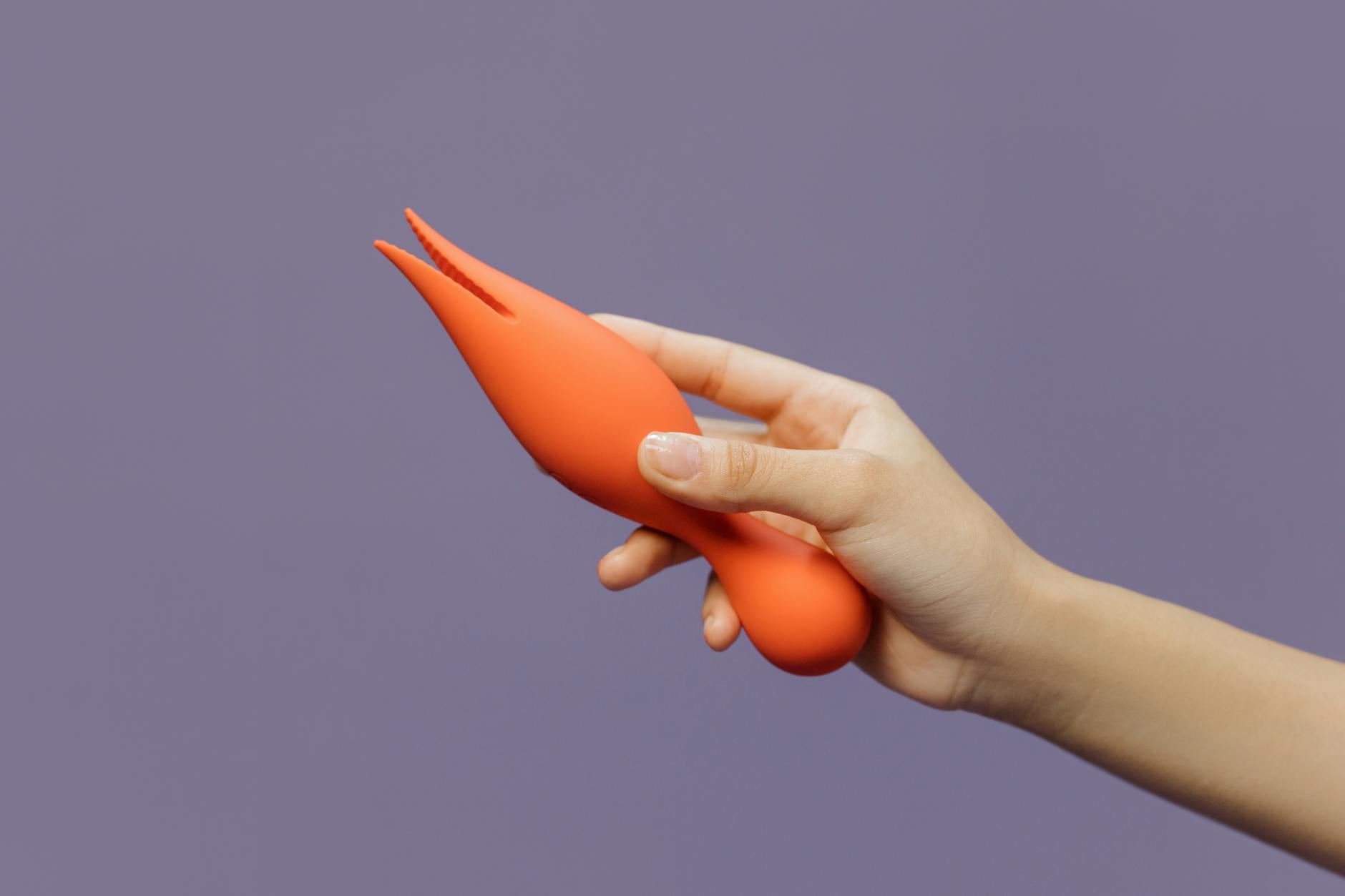
How to Use a Lemon Vibrator When You Want More Intense Pleasure but Sensitivity Limits You
Higher sensation doesn't mean higher intensity. Here's how to build pleasure safely when your body needs a gentler touch to reach the deepest satisfaction.
You want intense pleasure. Your body says "not so fast." And honestly? That's not a limitation. It's information. The people I work with who report the deepest, most consistent orgasms aren't the ones chasing maximum intensity. They're the ones who learned how to work with their actual nerve response instead of against it.
Here's what nobody explains: sensitivity and depth of pleasure are not the same thing. A lemon vibrator, especially one that uses suction rather than direct vibration, can unlock intense sensation at much lower intensity thresholds. The trick is understanding how to layer gentler stimulation in ways that compound instead of plateau.
When your clitoris feels overstimulated easily, there are usually three things happening at once. First, the nerve density in your clitoral tissue is responding faster than average. Some people are just wired this way. Second, the surrounding tissue might be more reactive due to blood flow, inflammation, or hormonal shifts. Third, and this matters most: you might have been trained to associate intensity with pleasure, so anything less feels like you're not doing it right.
You are doing it right. You're just doing it differently.
A lemon sucker like the Lem works in your favor here because suction creates sensation through pressure change rather than friction or hammering vibration. The patterns feel more nuanced. You can sense subtle variations in rhythm at lower intensities that you'd completely miss with direct vibration. This means you get to intensity through layering and buildup instead of starting at maximum and hoping.
Most vibrators market themselves on "10 settings" or "speeds 1 through 8." With a lemon clitoral vibrator that uses pulsation or suction, the real game is pattern. You're not trying to find the fastest speed. You're finding the rhythm that makes your body respond.
Here's the practical setup that works best when you're sensitive.
Start with pattern 1 or 2, not speed. On a lemon vibrator like the Lem, these are usually the slowest, most rhythmic pulses. Spend 3 to 5 minutes here. Not rushing. Your nervous system is learning this sensation. You're not supposed to come yet. You're supposed to feel the pressure wave and notice how your body responds.
Then move to pattern 3 or 4, which usually shifts from a steady pulse to something more varied. Stay for another 5 minutes. Your clitoris is warming up, your arousal is building, but you're not at the edge of that overwhelming feeling yet.
Once arousal is clearly building, you can stay with a mid-range pattern or shift to something more rhythmic. The key is that you're not fighting your sensitivity. You're using it. Your body is telling you exactly when to escalate because you're listening at a granular level instead of blasting past what you can feel.
This is the part that trips people up. If you're sensitive and you're using a lemon vibrator directly on bare skin, even gentle sensation can feel too much. The solution isn't to avoid the toy. It's to add a good water-based lubricant.
Lube does two things for sensitive people. First, it creates a glide layer that softens the intensity without reducing sensation. The vibration or suction still reaches your nerves, but the sharpness is gone. Second, it prevents that slightly raw feeling that comes from direct friction, which can actually create false sensitivity. You're not more sensitive. You're just irritated.
Apply lube generously around the clitoral area. Let it sit for 10 seconds. Then start with your lemon vibrator. You'll notice the sensation is different. Smoother. More diffuse. And because of that, you can often reach deeper pleasure because you're not fighting the discomfort of intensity.
Here's something most people miss. The same lemon clitoral vibrator will feel completely different depending on whether you're placing it directly on the clitoris or an inch away, angled slightly. When you're sensitive, angle becomes your best tool.
Try this. Position the vibrator at the base of your clitoris rather than directly on the tip. The nerve density is high here, but the sensation is less acute. You get strong stimulation without that almost-too-much feeling. Or angle it so that the vibration pulse hits the side of the clitoris rather than head-on. Same toy. Completely different sensation.
You can also use the vibrator on the mons pubis, the fatty tissue above the clitoris. This creates a broader, more distributed sensation that many sensitive people find easier to build arousal with. Then, once arousal is strong, you can move to more direct contact because your body is more resilient when it's already engaged.
If you're sensitive, you might feel like you need to stop or back off during pleasure. Don't interpret this as failure. Interpret it as information. Your nervous system might be processing a lot at that intensity. Instead of stopping completely, just pause the toy.
Keep your hands there. Breathe. Let your arousal stay high while the stimulation backs off for 10 to 20 seconds. Then restart at a lower pattern. This is called edging in one direction. Instead of stopping stimulation to prevent coming, you're pausing intensity to prevent overwhelm.
Many sensitive people find that three or four of these mini-pauses actually create a more intense orgasm than pushing straight through. Your body gets recovery moments, your nervous system stays engaged, and you hit a deeper threshold when you do come.
If you're holding a lemon vibrator directly against yourself for 10 to 15 minutes, arm fatigue changes the pressure you're applying. Unconsciously, you press harder. This is why hands-free options or positions that support the toy can help you maintain consistent, gentle pressure.
Try lying on your back with a pillow positioned so the vibrator can rest against you without your hands doing all the work. Or, if you're partnered, having someone else hold the toy lets you completely relax and communicate in real time about pressure and pattern without the distraction of logistics.
Your sensitivity isn't static. It shifts throughout your cycle, with stress, with sleep, and with how much you've used your body today. On days when you're more sensitive than usual, that's not a sign to push harder. It's a sign to drop your starting intensity by one pattern level.
Similarly, stress and burnout genuinely do change how responsive your body feels. When you're exhausted, your nervous system is dysregulated. You might feel overstimulated by contact that usually feels perfect. High Drive, Low Energy: How to Actually Have Pleasure When You're Exhausted walks through strategies for this exact scenario.
Hormonal shifts are huge too. During the follicular phase of your cycle, when estrogen is rising, your clitoris is naturally more sensitive. You might need a lower pattern on your lemon vibrator during that window. That's normal. That's biology. Adjust accordingly.
There's a real risk with any vibrator. Use the same intensity long enough, and your nerves adapt. You need higher power to feel the same thing. But here's the counterintuitive part. If you vary your patterns, your angles, and your intensity from session to session, you keep your nerve response fresh. You don't build tolerance because you're never doing the same thing twice.
This is why the pattern variety on a lemon clitoral vibrator matters so much. You're not stuck with "I need intensity 6 or nothing." You have pattern 1 through 8, and you can change them weekly. Your nervous system stays engaged. Your sensitivity stays responsive.
Yes, because of how suction-based stimulation works. Lemon vibrators use pressure waves rather than direct friction, which means you can get intense sensation at much lower intensity levels. Start with pattern 1 or 2, use lube, and adjust your angle. Many sensitive people find that after one or two sessions, they discover an angle or pattern that feels perfect.
Sensitivity is your baseline nerve response. Overstimulation is what happens when you're applying more intensity than your nervous system can process in that moment. You can be very sensitive and still have great sex. Just adjust intensity and pattern. Overstimulation is about pacing, not about the person.
Not necessarily. More frequent, shorter sessions with lower intensity often feel better than rare, intense marathons. Your body adapts better to consistent, gentle stimulation than to sporadic intensity. Try 10 to 15 minute sessions with patterns 1 through 4 instead of pushing for longer sessions at higher power.
Completely. Lube creates a glide layer that reduces friction without reducing sensation. It's the difference between direct stimulation and diffused stimulation. For sensitive bodies, that layer is often what makes pleasure accessible instead of uncomfortable.
Oftentimes, yes. Higher nerve sensitivity often means faster arousal and stronger sensation once you hit the right angle and intensity. The challenge isn't your sensitivity. It's finding the approach that works with it instead of against it.
No. If anything, regular use at controlled intensity helps you understand your body better and actually improves your ability to experience pleasure consistently. What matters is varying patterns and avoiding repetitive high-intensity use that can numb rather than arouse.