Let's talk about what actually changes at menopause
Your body shifts. Your pleasure doesn't end. I know that sounds like something people say to be nice, but it's actually physiologically true, and that matters because it reframes how you approach pleasure during menopause.
Here's what happens: estrogen drops, which means vaginal tissue gets thinner, lubrication decreases, and the pelvic floor loses some of its elasticity. Testosterone also drops (yes, people with ovaries produce it), and that affects desire and sensation. Blood flow patterns change too. These are real, measurable shifts. But here's what doesn't change: your capacity for pleasure, the nerve density in your clitoris, or your ability to experience intense orgasms. The neural pathways are still there. Your brain still works. You haven't lost anything except hormones.
The catch is that during menopause, most vibrators designed for younger bodies don't feel quite right anymore. They require too much direct friction on thinner tissue. They demand arousal to build quickly. They reward speed and intensity over sensation. That's where lemon clitoral vibrators come in. They're built differently.
Why lemon vibrators outperform traditional vibrators during menopause
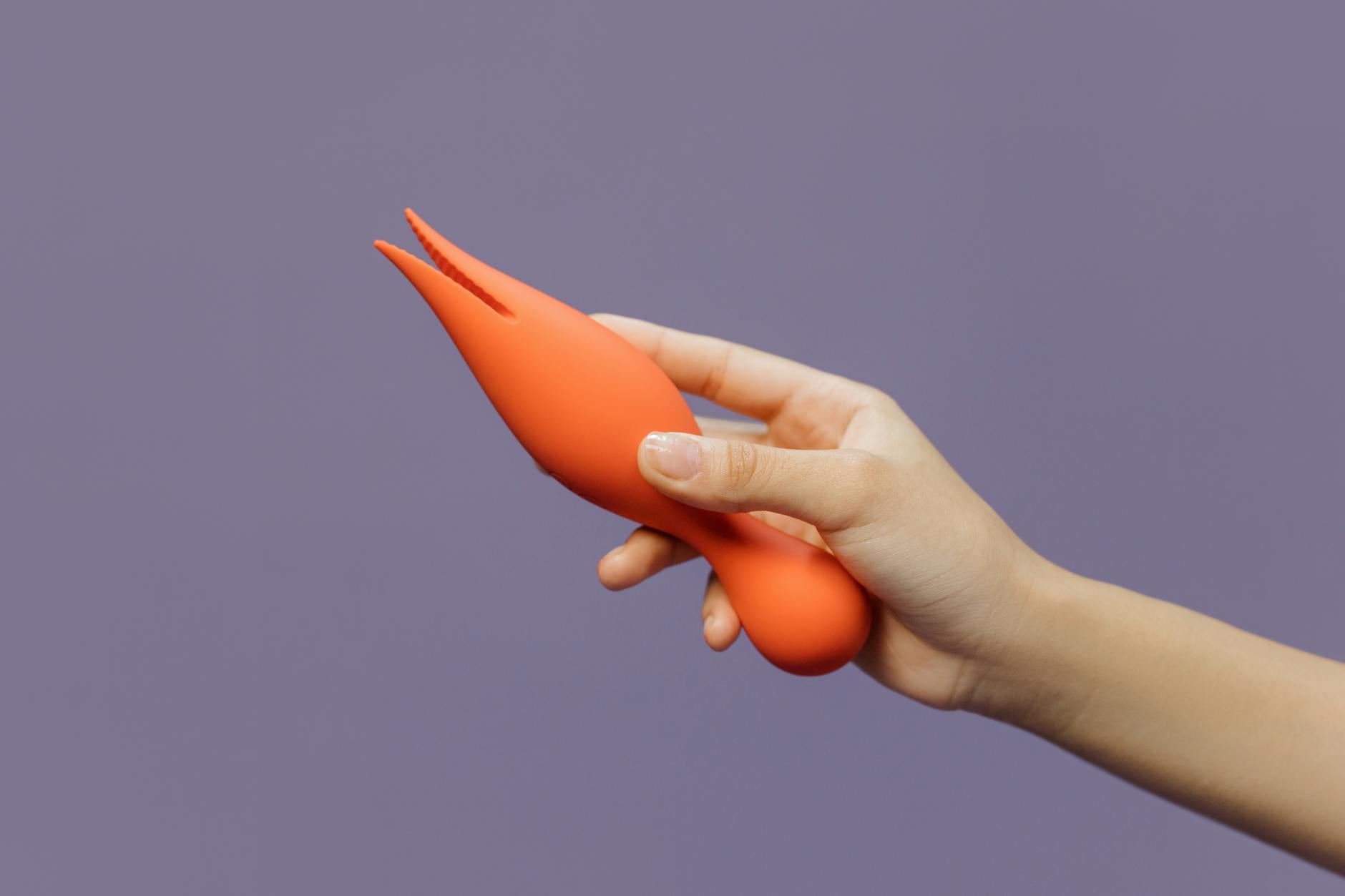
A lemon vibrator uses air-suction technology instead of direct vibration. Instead of moving back and forth against your skin, it creates a gentle pulse that draws the tissue upward, stimulating the entire clitoral complex including the internal branches you can't see. For menopausal bodies, this design choice matters because suction doesn't depend on surface friction. It works beautifully on delicate, thinner tissue. It's more comfortable. It builds sensation without rawness.
The suction technology also means you can start at lower intensity settings and experience real stimulation. A traditional vibrator on setting 1 might feel like barely anything. A lemon vibrator on pattern 1 feels like actual touch, intentional and present. That's huge when your body needs longer to warm up.
Second, the design encourages you to stay in the slow-build phase longer, which is actually ideal for menopausal pleasure anyway. Arousal takes 15 to 25 minutes to peak instead of 5 to 10. A lemon vibrator rewards that timeline instead of fighting it. You're not chasing intensity. You're exploring sensation, which is where the deepest pleasure actually lives.
The lubrication question (it's real but solvable)
Yes, you'll need lubricant. This isn't a failure of your body. It's a biochemical fact, and water-based lube is your friend. Here's why it matters: when tissue is thinner and less naturally lubricated, friction without lube feels uncomfortable instead of pleasurable. Water-based lubricant changes that entirely. It makes a lemon vibrator glide smoothly and feel protective rather than raw.
Apply lube generously. Reapply halfway through. The combination of a lemon clitoral vibrator plus good lubrication is actually where some of my clients report their most satisfying orgasms ever. This isn't about making do with less pleasure. It's about shifting from friction-based stimulation to pressure-based stimulation, which often feels richer.
Arousal takes longer, and that's not a problem
One of the biggest mental shifts during menopause is releasing the expectation that arousal should be fast. Your younger body might have responded to touch in seconds. Your menopausal body responds in minutes. A lemon vibrator is genuinely helpful here because the sensation builds gradually and doesn't demand you rush. You can start on pattern 1, stay there for 10 minutes, let your body adjust and warm up, then move to pattern 2. There's no pressure to accelerate. That unhurried rhythm actually tends to produce stronger, longer-lasting orgasms.
Many of my clients also find that they need more mental engagement during this phase. Arousal becomes less automatic and more intentional, which means fantasies, audiobooks, or partnered attention matter more. A lemon vibrator works beautifully in this context because it frees up your mental space. The sensation is reliable and builds predictably, so you can focus on desire instead of mechanics.
The pelvic floor connection
During menopause, the pelvic floor muscles lose estrogen support and can become tighter, more rigid. This affects sensation and comfort. Using a lemon clitoral vibrator actually helps because the suction gently stimulates the pelvic floor without forcing it to contract harder. Many people notice that after a few sessions with a lemon vibrator, the pelvic floor feels more supple and responsive, not exhausted.
If you have pelvic floor tension or pain during sex, this is worth mentioning to a pelvic floor physical therapist alongside your doctor. But in the meantime, a lemon vibrator is gentler on tight tissue than traditional vibrators because it doesn't require aggressive pelvic floor engagement to feel good.
Hormonal changes don't mean lower capacity
Here's something I want to be very clear about: experiencing stronger orgasms after 40 is completely normal. The myth that pleasure peaks in your 20s is just that, a myth. Some of my clients have their first real multiple orgasms during menopause because they finally have permission to slow down, explore their own bodies, and use tools designed for what their bodies actually need now. A lemon clitoral vibrator paired with time and attention can genuinely unlock pleasure you didn't have access to before.
The hormonal shifts are real. The discomfort can be real. But the myth that menopause kills pleasure is false. What changes is the method. And honestly, many people prefer the method that menopause introduces them to.
When to see a doctor about menopausal changes
If you're experiencing pain during sex or with a lemon vibrator, that's worth mentioning to a menopause-trained gynecologist or GP. Genitourinary syndrome of menopause (GSM) is common and very treatable, often with topical estrogen creams that have minimal systemic absorption. You don't have to white-knuckle through this. Treatment can make a real difference in weeks.
If desire has completely vanished and isn't returning with time and tools, testosterone therapy is worth discussing with a provider. It's prescribed thoughtfully, but it's available, and many people find it transformative.
Also, if you're on any hormonal replacement therapy, that can shift how your body responds to a lemon vibrator or any other sexual tool. A conversation with your prescriber about the specifics of your HRT might reveal why something that worked before feels different now.
How to actually use a lemon vibrator during menopause
Start with pattern 1 or 2. Spend time there. Use good water-based lubricant. Plan for 20 to 30 minutes of exploration, not 10 minutes of intense stimulation. If you have a partner, this is an excellent time to explore together slowly. If you're solo, create a calm environment where you can pay attention.
Many people find that a lemon vibrator works best when combined with fantasies, audiobooks, or other mental engagement. Your arousal during menopause is often more responsive to context and imagination than it was before. That's not a loss. It's just a shift in what creates desire.
If your first session doesn't feel amazing, don't abandon the tool. Your body needs a few sessions to adjust to the sensation, especially if you've been using traditional vibrators for years. By session three or four, most people feel a significant shift in comfort and pleasure.
FAQ: Lemon Vibrators and Menopausal Pleasure
Can I use a lemon clitoral vibrator if I'm experiencing vaginal dryness?
Absolutely. In fact, a lemon vibrator is better suited to dryness than traditional vibrators because the suction technology doesn't depend on natural lubrication. Pair it with water-based lubricant, and you'll likely find it more comfortable than other options. The lube protects delicate tissue while the vibrator provides steady, gentle stimulation.
How long does it take to feel pleasure with a lemon vibrator after 50?
Most people feel noticeable sensation immediately, but the kind of deep, satisfying arousal that leads to orgasm usually takes 15 to 25 minutes. Your body is adjusting to the sensation and building arousal at its own pace. That timeline is completely normal and actually often leads to longer, more intense orgasms than the quick-hit experiences of younger years.
Will a lemon vibrator help if hormone replacement therapy hasn't solved my desire issues?
Often, yes. HRT addresses some hormonal symptoms, but desire is multifactorial. It depends on stress, relationship dynamics, body image, mental health, and sometimes just the right tool and environment. A lemon vibrator gives you a concrete way to explore pleasure without relying only on hormones to drive desire. Many people find that using a tool helps rebuild the neurological pathways for arousal independently of hormone levels.
Is it safe to use a lemon vibrator every day during menopause?
Yes. Using a lemon clitoral vibrator daily is safe for most people. You won't cause desensitization if you're also taking breaks and using different patterns. If you do notice that sensation feels numb or less responsive, take a few days off and come back. The vibrator is a tool. Your body still leads.
What's the best lemon vibrator for menopausal bodies specifically?
The Lem is excellent for menopausal bodies because the suction intensity is adjustable and the patterns range from very gentle to more intense. You can start soft and build. The small, ergonomic shape is easy to position without strain, and the battery life means you're never cut off mid-session. If you're new to suction vibrators, starting with an accessible option like the Lem makes sense.
Can I use a lemon vibrator with my partner during menopause?
Yes. In fact, partnered use can be really connecting during menopause because it removes the pressure for spontaneous desire and creates intentional intimacy. Learning to use a lemon vibrator with a partner takes conversation and patience, but many couples find that this phase of life actually deepens their sexual connection because both partners are invested in figuring out what works now.
The truth about menopause and pleasure
Menopause is a doorway, not a deadline. Your body is changing in measurable ways, and those changes matter. But a lemon clitoral vibrator, combined with time, attention, and the right information, can help you discover that the pleasure on the other side of hormonal shifts is often richer and more satisfying than what came before. You haven't lost capacity. You've just shifted method. And honestly, most people prefer the method that menopause introduces them to.