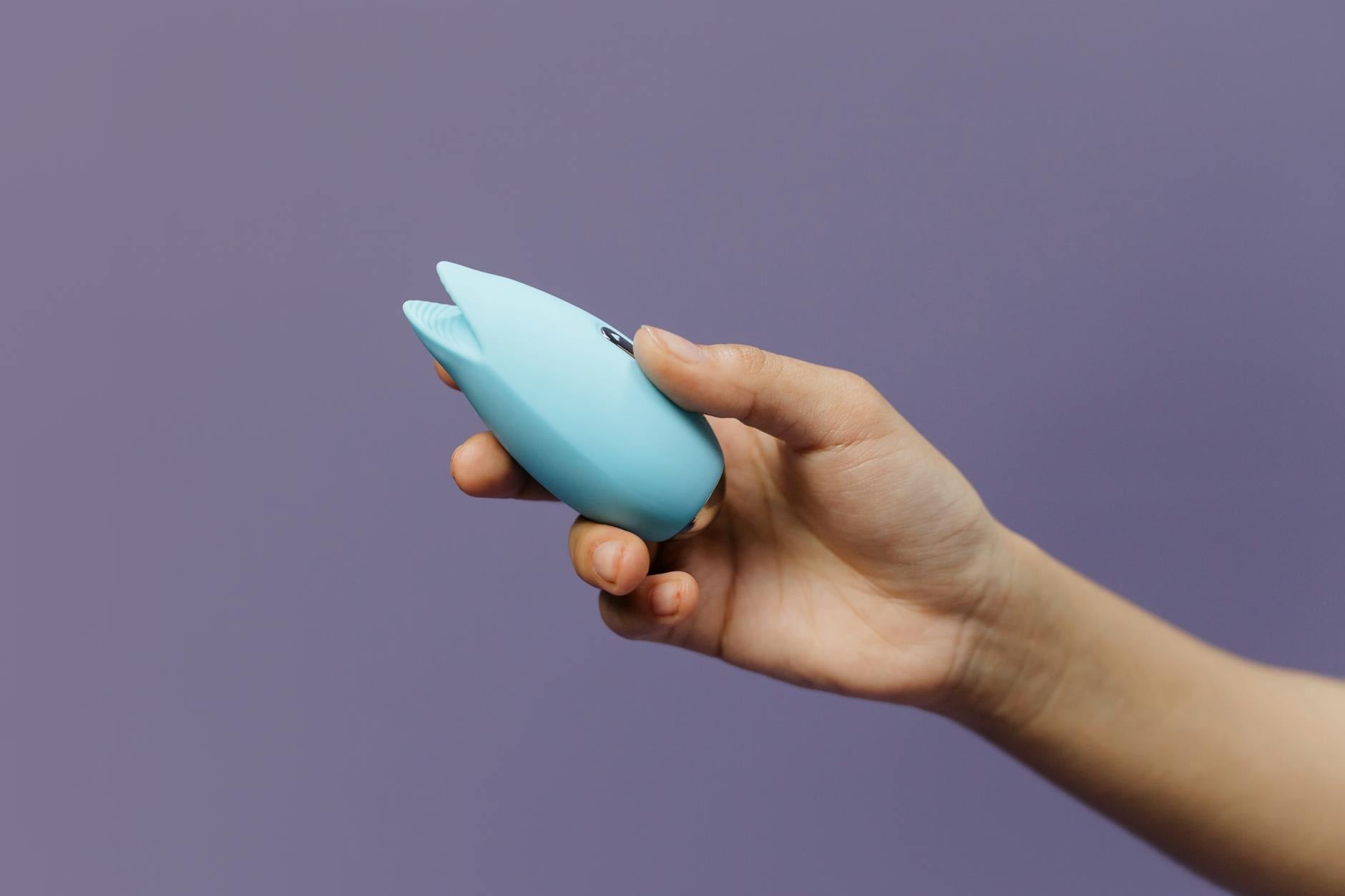
Let's talk about the thing nobody mentions
You've been using your lemon vibrator regularly. Everything felt incredible at first. And then one day you realize you need it on a higher pattern just to feel the same sensation. Or you need it for longer. Or both. That creeping sense that your body's turned down the volume on pleasure is real, and it has a name: desensitization.
Here's the thing: desensitization is not a sign that you've broken yourself or that you need to quit vibrators forever. It's a normal neurological adaptation, and it's completely reversible. I'm going to walk you through exactly what's happening and the exact steps to rebuild that sensitivity so your lemon clitoral vibrator feels like a power tool again instead of background noise.
What desensitization actually is (and why it happens)
Your body is incredibly adaptable. When you repeatedly expose your nerves to the same stimulus at the same intensity, they learn to expect it. The neural pathways downregulate their sensitivity as a form of self-preservation. This happens with caffeine (you need more to feel awake), with Instagram doom-scrolling (the dopamine hit gets smaller), and with vibration.
The technical term is "habituation." Your nervous system isn't saying "no thank you." It's saying "okay, I've filed this away." When you use a lemon vibrator at the same pattern, intensity, and duration every single time, you're training your body to treat that input as white noise.
A few specific factors make it more likely:
Using the same pattern repeatedly without variation. Your clitoral tissue learns the rhythm and starts tuning it out. The Lem vibrator has multiple patterns for exactly this reason. Cycling through them prevents habituation faster than sticking with one.
Too-frequent sessions without recovery time. If you're using your lemon adult toy daily or multiple times per day without breaks, your nerve endings genuinely need downtime to reset. This is biological, not psychological.
Starting on high intensity and staying there. Many people jump straight to pattern 5 or 6 because they think they need it. Building tolerance to high intensity is exactly how you end up chasing sensation instead of feeling it.
How to tell if it's actual desensitization (and not something else)
Before you rebuild sensitivity, make sure you're actually dealing with habituation and not another cause.
Desensitization looks like this: the vibrator still works, but you need higher intensity or longer duration to reach the same sensation you used to feel. Your partner's touch still feels fine. Spontaneous arousal still happens. Nothing hurts.
Other things that mimic desensitization: hormonal changes (especially around cycle shifts), certain medications (SSRIs are notorious for this), dehydration, stress, relationship tension, or just being distracted. If you're stressed about work or your relationship is rocky, your body will deprioritize pleasure signals. That's not desensitization. That's your nervous system keeping score.
Go through a quick checklist. Are your stress levels higher than usual? Has your hormone picture changed? Are you taking any new medications? Did something shift in your relationship? If yes to any of these, address those first. A lemon vibrator can't fix stress or relationship distance.
If the answer is no and you're certain this is about the vibrator specifically, read on.
The reset protocol that actually works
You don't have to quit your lemon vibrator. You have to take a strategic break, then rebuild with intention.
Step 1: Take a break (7-10 days minimum).
This is the hard part, but it's non-negotiable. Your nerve endings need to forget the stimulus. Seven to ten days is the minimum. Some people need two weeks. You'll know the break is working when you start to feel spontaneous arousal again or when your body feels more "awake" generally.
Use this time to explore touch without vibration. Your hands, your partner's hands, your partner's mouth. Pay attention to sensation. This retrains your nervous system to register gentler input.
Step 2: Start back at the lowest pattern.
This feels counterintuitive because pattern 1 on the Lem probably feels almost nothing compared to what you're used to. Start anyway. Sit with the lowest setting for a few minutes. You might be surprised how much you can actually feel.
The point here is recalibration. You're teaching your body that pleasure doesn't require maximum intensity. You're also stretching out the sensation. Pattern 1 can feel completely satisfying if you give it time instead of chasing pattern 5.
Step 3: Rotate patterns every 2-3 days.
Once you've spent a few days with pattern 1, move to pattern 2. Then pattern 3. Keep rotating. By varying the stimulus, you prevent your nerves from adapting to any single input. This is the difference between riding the same train route every day (habituation) and taking different routes (novelty and sustained sensation).
Step 4: Build in mandatory breaks between sessions.
Don't go back to daily use immediately. Aim for every other day or even every third day initially. Your nervous system needs recovery time. Think of it like exercise. You don't hit your muscles with maximum intensity every single day. You rest so they can rebuild stronger.
Once you've rebuilt sensitivity, maintenance looks like 3-4 sessions per week instead of daily. Rotate through patterns. Vary your session length. Some sessions use the vibrator for 2 minutes, some for 10. Novelty is your friend.
The middle-ground move if you can't take a full break
Some people can't take 7-10 days off. Work stress, relationship timing, just don't want to. Fair enough.
If that's you, use this partial reset instead. Take a 3-4 day break instead of a full week. During those days, use only your hands or your partner's touch. When you reintroduce the vibrator, commit hard to the pattern rotation rule. Use pattern 1 for a few days, then cycle through. Skip the highest patterns entirely for the first two weeks.
You'll rebuild sensitivity more slowly this way, but it still works. It's 70% of the reset protocol's impact instead of 100%, but 70% is better than staying stuck.
Why lemon suction toys like the Lem can actually prevent desensitization better than standard vibrators
Not all stimulation creates equal habituation. Suction-based clitoral vibrators like the Lem use a different mechanism than traditional vibrators. Instead of direct friction or vibration alone, they create a seal and apply gentle suction with rhythmic pulses.
This matters because suction engages a different set of nerve endings than pure vibration. When you rotate between suction patterns and vibration patterns, you're hitting your nerve endings from multiple angles. That variety is what keeps desensitization at bay.
If you're using a standard vibrator and experiencing rapid desensitization, switching to a lemon clitoral vibrator or mixing in sessions with one can genuinely help break the cycle. The mechanical difference means your body registers it as novel stimulus even if you're using it regularly.
The psychological piece you can't skip
Desensitization is partly neurological and partly psychological. If you've been using the same vibrator in the same way at the same time every day, your brain has filed it under "routine." Routine is pleasure's enemy.
Variety matters more than you think. Change the setting. Change the time of day. Use it during partner sex instead of solo. Try it in a different position. Blindfolded. With a partner watching. The novelty signals to your nervous system that this is interesting and worth paying attention to.
This is why so many of my clients report that taking a break and then reintroducing the vibrator with a partner present, or with a new pattern they haven't tried, instantly restores that intense feeling. It's not the break alone. It's the break plus the novelty.
If you've been using your lemon vibrator solo and always in the same way, introduce variation immediately. That alone often restores some of the lost sensation within a few sessions.
When to see someone (and when not to panic)
Complete loss of sensation that doesn't return after a 2-week reset plus pattern rotation is worth checking with a doctor. It could point to nerve damage, hormonal changes you haven't noticed, or medication side effects.
But mild desensitization? That's just your body being smart. It's a sign to play around with your approach, not a sign that your pleasure capacity has fundamentally changed.
Most people recover full sensitivity within 2-4 weeks using this protocol. Some take longer if they've been using vibrators at high intensity for years. That's fine. You're rebuilding, not rushing.
The long game
Once you've regained sensitivity, the maintenance is simple: rotate patterns, take breaks between sessions, vary your approach. Don't get complacent and fall back into the same-pattern daily routine. Your nervous system thrives on novelty.
Desensitization isn't a permanent state. It's feedback from your body saying you need to mix things up. Listen to it. The sensation you're chasing isn't gone. It's just quieter. Wake it back up with intention and patience. If you're working on rebuilding pleasure after a long break from sex, introducing a lemon vibrator with the variation strategies outlined here can actually speed up your recalibration. Different tools, different patterns, different contexts all signal to your nervous system that pleasure is worth tuning into again.
Your sensitivity will come back. You deserve the sensation. Now go get it.
People also ask
How long does vibrator desensitization take to happen?
Desensitization typically begins after 2-4 weeks of regular vibrator use at the same intensity and pattern. Some people notice a shift after just a few weeks of daily use, especially if they're starting at high intensity. The timeline depends on how frequently you use the vibrator and whether you're rotating patterns. If you use the same setting every day, you'll adapt faster than if you vary it every session.
Can you use a lemon vibrator every day without desensitization?
Yes, if you rotate patterns and vary your approach. Daily use of the Lem vibrator won't cause desensitization as long as you're cycling through different patterns and occasionally taking 1-2 day breaks. The key is novelty. If you use pattern 1 one day, pattern 3 the next, and pattern 5 the day after, your nervous system stays engaged. Use the exact same pattern every single day, and you'll adapt quickly.
What's the fastest way to get sensitivity back after vibrator use?
A full 7-10 day break combined with strict pattern rotation when you restart produces results fastest. Most people regain 80% of their sensation within the first 2-3 sessions using a different pattern than their default. If you combine the break with introducing a lemon clitoral vibrator (if you haven't used one) or switching to a different type of stimulation entirely, recovery happens even quicker because your body registers it as completely novel input.
Is desensitization from lemon vibrators permanent?
No. Desensitization is completely reversible. Your nervous system doesn't permanently lose the ability to feel sensation. It just learns to tune out repetitive input. A break plus variation restores sensitivity reliably. The longest recovery I've seen is 4-6 weeks of consistent pattern rotation for someone who used the same setting daily for over a year.
Does using lumen vibrators on low intensity prevent desensitization?
Starting low actually prevents desensitization better than starting high. When you begin with pattern 1 and work up, your nervous system registers each increase as novel. When you start at pattern 5 and stay there, you've given your body nowhere to go. If you're concerned about desensitization, dial back your starting intensity. You'll feel more sensation over the course of your session and your body will adapt more slowly.
Can a partner help rebuild vibrator sensitivity?
Absolutely. Incorporating partner touch during your reset period helps recalibrate your nervous system to notice gentler sensation. When you reintroduce the lemon vibrator, using it during partnered sex instead of solo play also signals novelty to your brain. The combination of sensations and the psychological element of sharing the experience makes the vibrator feel new again, even if it's the same device.