
Here's what nobody tells you about bringing toys into long-term partnership
After 10, 15, maybe 20 years with the same person, the idea of introducing a vibrator can feel loaded. Will they think you're bored? That you want them to change? That something's broken? Those questions aren't new to relationships, but they feel sharper when you've built something stable together. The good news is that couples who've already weathered years of intimacy actually have a massive advantage: you already know how to talk. You've just never talked about this yet.
Introducing a lemon clitoral vibrator into a long-term monogamous relationship isn't about fixing anything. It's about curiosity. And curiosity, when it's framed right, makes the whole thing less scary.
Why long-term couples hesitate (and why those reasons aren't wrong)
Let me name what's actually happening when you feel nervous about this conversation. You're not afraid of a toy. You're worried about what it means about you, about them, about the relationship itself. Will introducing a lemon vibrator suggest that what you've been doing isn't enough? After a decade of intimacy, does asking for something new feel like you're rewriting the contract?
Those anxieties are legitimate. They deserve acknowledgment, not dismissal. The mistake most people make is sitting with the anxiety in silence instead of actually naming it out loud. Silence turns "I want to try something new" into "I'm not satisfied," which is a completely different conversation.
In my practice, I've worked with dozens of couples navigating this exact moment. The ones who move forward smoothly are rarely the ones with the "best" sex lives already. They're the ones who've practiced saying difficult things to each other. And if you've been monogamous for years, you've already done that work. You've survived fights, misunderstandings, and awkward conversations. You can survive a conversation about a toy.
The framing that actually works
Timing and context matter more than the words themselves. Here's what I recommend:
Pick a moment when you're both relaxed and clothed. Not in bed, not after a drink, not when one of you is tired or stressed. This isn't foreplay. It's a conversation. Say something like: "I've been thinking about trying something new with you, and I want to talk about it first because your comfort matters to me."
That sentence does three things. It flags that you're proposing an experiment ("trying something new"), it centers them ("with you"), and it shows respect for their opinion ("because your comfort matters"). None of that is manipulation. It's honesty.
Then pause. Let them respond. Don't flood them with reasons or benefits. Let them ask questions. "What do you mean?" is the most helpful response because it means they're engaged, not defensive.
What you're actually saying when you say "I want to introduce a lemon vibrator"
In long-term relationships, adding anything new can feel like a referendum on what already exists. It's not. A lemon clitoral vibrator doesn't replace anything. It expands the toolbox.
Explain it this way: "I want to try something that feels good for me, and I want to explore it with you. I'm not asking you to change anything you're doing. I just want to add to what we're already doing."
Some partners will immediately be curious. Others will need time. Both are normal. If they say no or "I need to think about it," that's information, and it's worth respecting. You might ask what their hesitation is. Often it's one of three things: they're worried they'll feel replaced, they're unsure how it'll work physically, or they don't know if they're "supposed" to use it themselves.
All of these are addressable. Replaced? Explain that the toy does one thing (deliver consistent stimulation), and they do everything else (touch, presence, conversation, connection). Unsure how it works? Show them. Worry about self-use? You can explore together or separately. It's your choice together.
The actual introduction (when you get there)
If your partner is on board, the next step is less scary than you think. Start with exploration that has zero pressure attached. A lemon vibrator like the Lem doesn't require penetration or any particular position. You can use it during foreplay, during partnered sex, or on your own while they're present. You get to decide.
First time: turn it on at a low setting and see how it feels. You might do this alone first, or with your partner watching. Both are fine. If you're together, they don't need to do anything. They can just be present. That presence matters more than any specific action.
Second time: maybe they touch you while you use it. Or they use it on you. Or you use it while they're inside you. The options are genuinely endless, and none of them are mandatory. You're building a new language together, and that takes time.
What actually changes when you add a toy
Here's the honest part: some things shift. Orgasms might come faster. The sensation is different from hands alone because suction-based stimulation (like what a lemon clitoral vibrator provides) doesn't require the same physical friction. Your pelvic floor engages differently. You might discover positions that work better. You might have orgasms you've never had before.
None of this is better or worse than what came before. It's just different. And different, when you've been doing the same thing for 15 years, can feel revelatory.
The thing partners worry about most is speed. "What if it works too fast?" the fear goes. As if speed equals something bad. Speed means efficiency. Your body knows what it wants, and a tool designed for clitoral pleasure learns fast. That's actually the point. If you've been faking it or waiting out long sessions, a lemon vibrator might be the first time your body gets what it's asking for. That's worth celebrating, not mourning.
The emotional work (which matters more than the physical work)
After you've tried it, check in. Not in a clinical way. Just ask: "What did that feel like for you?" And actually listen. Your partner might feel turned on, curious, a little awkward, or somewhere in between. All of those are data points. They help you understand what to do next.
If they felt left out or uncomfortable, acknowledge it. It doesn't mean you can't use the toy. It means you need to find a version of shared pleasure that works for both of you. Maybe they use it on you instead of you using it on yourself. Maybe you use it while you're kissing them. Maybe you use it alone and just tell them about it afterward. There's no one right way.
Over time, what started as "trying something new" often becomes woven into the texture of your shared intimate life. It stops being A THING and just becomes a thing. A tool in the drawer. A possibility on the menu.
When a lemon vibrator actually solves a problem
I want to mention one more thing because it's real and it matters. Sometimes couples use a lemon vibrator not out of curiosity but out of necessity. If you've been struggling with orgasm, or if you've been avoiding sex because it doesn't feel satisfying, a clitoral vibrator can be genuinely transformative. That's not about what was wrong before. That's about your body changing, medications shifting things, or just years of habit settling into a pattern that doesn't work anymore.
If that's your situation, the conversation shifts slightly. You're not asking "Can we try something new?" You're saying "This matters to me, and I want to find a way forward that feels good for both of us." That's a more serious conversation, and it deserves more space. Consider talking to a sex therapist or relationship counselor alongside this conversation. They can help you navigate it together.
Common questions couples ask
Will using a lemon vibrator mean we need less partnered sex?
No. If anything, pleasure begets pleasure. When you're having more satisfying orgasms, most people want more sex, not less. The toy doesn't replace your partner. It adds possibility.
What if my partner wants to use it and I'm not sure?
Take time. You don't have to decide right away. Some people need to see it being used before they feel comfortable. Some need to read about it. Some need a conversation with a therapist. All of that is fine. Move at the pace that feels safe.
How do we talk about what we liked afterward?
Simply. "That felt good" or "I want to try that again" or "I want to try something different next time." You don't need fancy language. Just honesty.
Will introducing a lemon clitoral vibrator make my partner feel inadequate?
Not if you frame it right. A vibrator doesn't do what a person does. It delivers stimulation. A person brings presence, attention, and connection. Those aren't interchangeable. If your partner is feeling insecure, that's worth addressing directly. It's usually not about the toy. It's about something else underneath that deserves attention.
What if I introduce it and they hate it?
Then you don't use it with them. You might use it solo. You might store it away and never think about it again. Or you might try again in six months when they've had time to adjust to the idea. Rejection of an idea isn't rejection of you.
Can we use a lemon vibrator during partnered penetrative sex?
Absolutely. Many people use a clitoral vibrator during penetration. It takes pressure off your partner to provide both penetration and clitoral stimulation at the same time, which is physically impossible. It actually often feels better for both people.
The thing nobody says but should
After 10, 15, 20 years, you've built trust. You've seen each other at your worst and stayed. That foundation means you can have this conversation. You can be awkward. You can change your mind. You can try something and decide it's not for you. You can introduce a toy and have it change everything or change nothing.
The conversation is the point. The toy is just the vehicle for it. And if you're brave enough to have it, you're already doing the most important work.
Ready to make a shift in your intimate life? Start with the conversation. The rest follows.
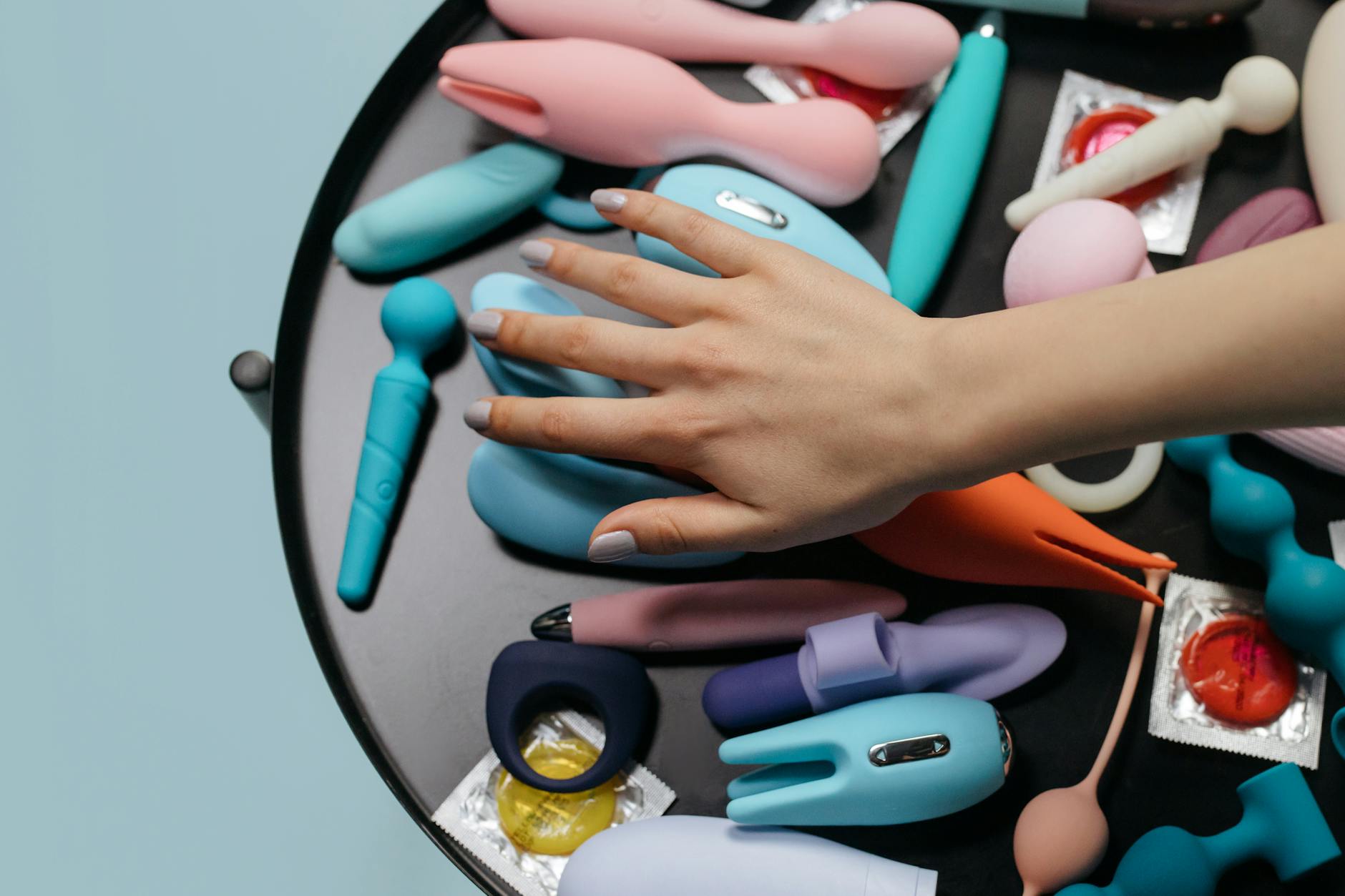
Photo by cottonbro studio on Pexels