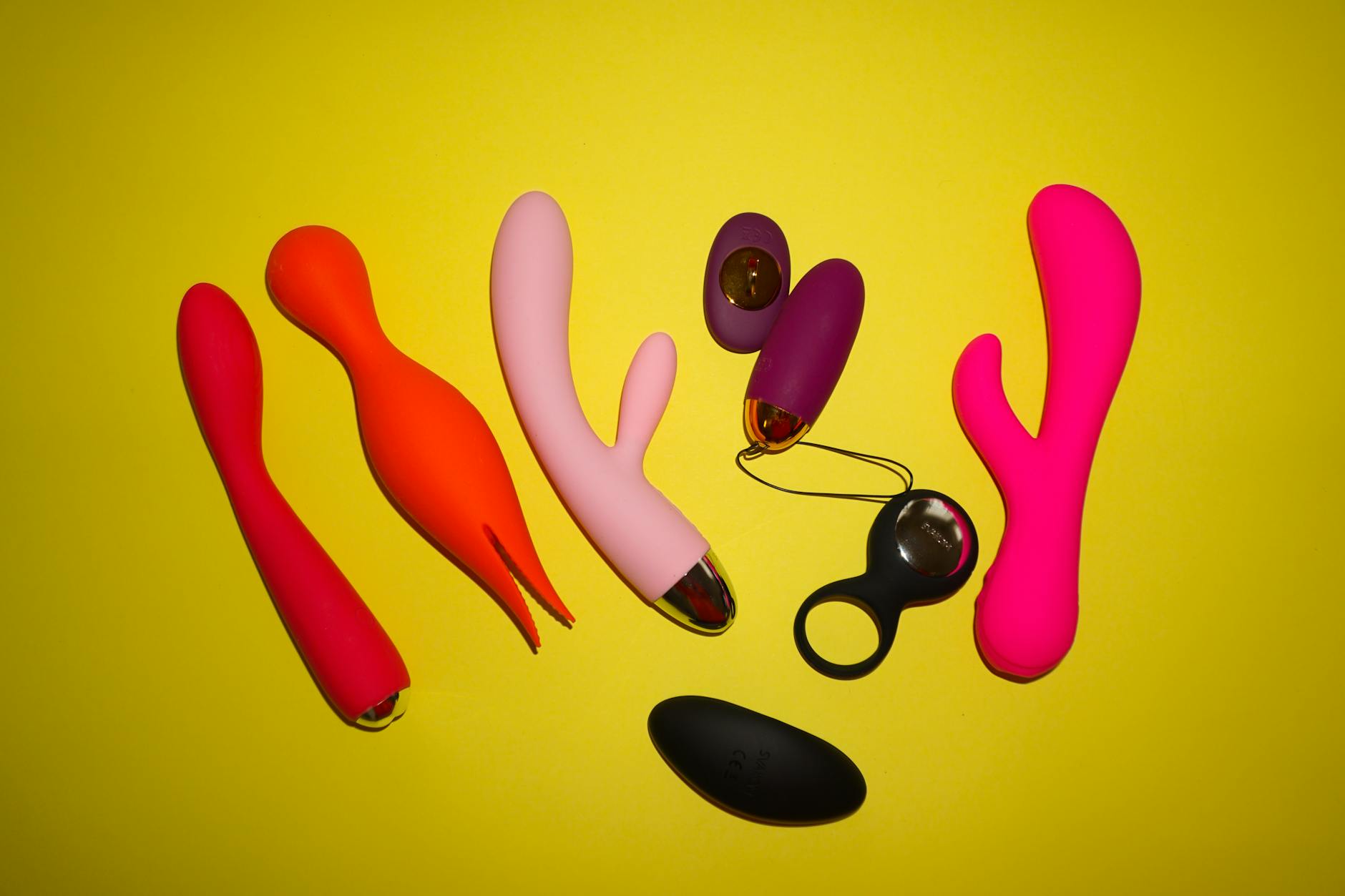
Let's name what's really happening
Honestly, the biggest myth about pleasure after 40 is that it disappears. It doesn't. But it does change. And if you're expecting it to feel exactly like it did at 28, you're going to feel frustrated, confused, or worse, convinced something's wrong with you when actually something's just different.
The good news? Different doesn't mean worse. It means you get to learn your pleasure all over again. And that's actually kind of thrilling if you let it be.
The body chemistry part
Let's start with what's factual. After 40, hormone levels begin shifting (whether or not you're in perimenopause or menopause). Estrogen fluctuates. Testosterone doesn't disappear, but it does change. Your skin loses collagen, including in the tissue around your genitals, which means sensitivity can feel muted at first. Blood flow to the clitoris takes slightly longer to build, which is why arousal might feel less like a switch and more like a dimmer.
Your nervous system also ages differently than your skin does. The good news is that nerve sensitivity around the clitoris actually stays stable. What changes is how quickly the signal travels and how your brain interprets it. The clitoral vibrator you loved at 30 might need tweaking now, but that's a tuning issue, not a breaking issue.
Why your lemon vibrator might feel less intense than it used to
There are three main reasons this happens:
The tissue thickness shift. Declining estrogen makes genital tissue thinner and more delicate. This sounds like bad news, but it's not. Thinner tissue is actually more sensitive to the right kind of stimulation. The catch is that the same pressure that felt perfect at 32 might feel too direct now. Suction-based stimulation, like what a lemon clitoral vibrator provides, actually becomes MORE effective because it doesn't rely on friction. Air-pulse technology stimulates without mechanical grinding.
Your arousal timeline changed. You're not broken. You're just operating on a different schedule. At 40, your body might take 15 to 20 minutes to fully respond, where at 25 it took five. This isn't about desire, it's about blood flow and neural response time. If you're jumping straight to maximum intensity lemon vibrator patterns without warming up first, of course it's going to feel like you're chasing something that isn't quite there.
Your brain got pickier. And thank god for that. By 40, you've likely shed a lot of the performance anxiety that lived rent-free in your head at 22. But you've also become more aware of distractions: the work email you didn't send, your partner's mood, whether you locked the door. This mental load is real, and it absolutely affects what your body can register physically.
The patterns that work better now
If you own a lemon vibrator or are thinking about getting one, here's what I recommend adjusting:
Start at lower intensity settings. Pattern 1 or 2, not pattern 5. Give yourself permission to build up over time instead of going for maximum sensation immediately. This isn't compromise. It's strategy. Gentler patterns create more sustained pleasure, and sustained pleasure leads to better orgasms than chasing intensity does.
Extend your warm-up. Spend 10 minutes on external stimulation, direct clitoral contact, or even just time with your partner before introducing the vibrator. Your tissue needs blood flow. Your brain needs permission to stop thinking about tomorrow's meeting. Give both of those things runway.
Use suction differently. Lemon vibrators work via suction technology, which is brilliant after 40 because it doesn't require the same kind of direct pressure that feels harsh on thinner tissue. Instead of holding the vibrator stationary, try gentle circles or light pulses. Let the suction do the work rather than pressing harder.
Layer in sensation. Temperature, texture, and sound all become more important as straight-up intensity becomes less the whole story. Try warm lubricant, different textiles, or just a conversation with your partner about what you're feeling. Pleasure after 40 is multisensory in a way it wasn't before.
The mental adjustment no one talks about
Here's what I see in my practice again and again with people over 40: the biggest block isn't physical. It's the story they're telling themselves about what pleasure "should" look like now.
You're supposed to be past this. You're supposed to have figured it out. You're supposed to be grateful for what you have. And honestly, maybe you are all those things. But gratitude and desire aren't the same emotion, and you can feel both at the same time.
The shift from "I should be grateful for what I get" to "I deserve to explore what I actually want" is where things change. That's where pleasure becomes interesting again instead of obligatory.
When you need to address something bigger
If you've noticed that your desire has completely flatlined, not just shifted, that's worth investigating separately from sensation. Depression, anxiety, thyroid issues, and relationship conflict can all tank desire in ways that have nothing to do with your clitoral vibrator. Same with medications. Many blood pressure meds and antidepressants affect arousal as a side effect. Worth talking to your doctor about.
If sensation feels painful or numb rather than just different, see someone. Genitourinary syndrome is real and treatable. Neuropathy is real and treatable. You don't have to white-knuckle through this.
What actually gets better
After 40, a lot of people experience orgasms that are deeper and longer than they had before. This isn't a myth. It happens because you know your body better, you're less in your head, and your pelvic floor has developed strength over decades that actually enhances sensation.
Many of my clients report that their most satisfying sexual experiences have come in their 40s and beyond. Not because their body is "better," but because they finally felt comfortable asking for what they wanted, because they stopped performing pleasure and started actually having it, and because they chose partners or moments where they could be honest about what they needed.
A lemon vibrator can be part of that rediscovery. But the real tool is permission. Permission to take longer to warm up. Permission to adjust what worked before. Permission to let pleasure look different now.
The rhythm reset
Think of this phase as a rhythm recalibration rather than a breakdown. Your body isn't broken. The clitoral vibrator you love isn't suddenly useless. You're just relearning the tempo, the intensity curve, the warm-up time. That's not loss. That's evolution.
Most of the people I work with who've adjusted their approach to pleasure after 40 report feeling more satisfied, not less. Not because their body changed for the better, but because they stopped fighting the change and started working with it instead.
Start with lower patterns. Take longer to warm up. Adjust your expectations about what "fast" should mean. And then notice what actually happens when you give yourself permission to explore differently.
Frequently asked questions
Why does my lemon vibrator feel less sensitive on my body than it used to?
Tissue sensitivity doesn't actually decrease, but how quickly blood flows to your clitoris does. This means arousal builds more slowly, so the vibrator needs warm-up time before it feels like much of anything. If you're jumping straight to full intensity without warming up, you're fighting biology. Give yourself 10 to 15 minutes of buildup first, and the same vibrator will feel completely different.
Is decreased sensation after 40 a permanent thing?
It's not permanent in the sense of "forever," but it is a sustained change while hormone levels are shifting. The good news is that you can absolutely work with it instead of against it. Using suction-based vibrators like lemon clitoral vibrators actually becomes more effective because they don't rely on friction, which can feel irritating on thinner tissue. Many people find that adjusted approach brings them back to strong sensation within a few weeks.
Can I still use the same vibrator intensity I used before 40?
You can, but you probably don't want to. It's not that your vibrator broke or that your body broke. It's that the intensity that felt perfect before might feel jarring or too direct now that tissue is thinner and sensitivity patterns have shifted. Try dropping down to pattern 1 or 2 and building up. You might find you actually prefer the sustained pleasure of medium intensity to the quick spike of maximum intensity anyway.
Does pleasure after 40 feel physically different, or is it psychological?
Both. Your body has physically changed, so sensation is literally different. But your mindset also shifts, and that actually amplifies pleasure in ways that matter. Less performance anxiety, clearer sense of what you want, and more comfort asking for it. The psychological shift often matters more than the physical one.
Should I switch to a different toy if my lemon vibrator doesn't feel the same anymore?
Not necessarily. Most people find that adjusting how they use the toy they already have works better than switching to something new. Lower patterns, longer warm-up, different positioning, or trying suction at a different angle can completely change the experience. You might also try exploring new lemon vibrator patterns to see what your body responds to now.
Is it normal to need more time to reach orgasm after 40?
Completely normal. This is one of the most common shifts people experience, and it's not a sign of anything wrong. Your nervous system is operating differently. Blood flow takes longer to reach peak. Your brain might be processing more information. All of this is age-appropriate and actually manageable once you stop fighting it and start planning for it. Build in that time as part of foreplay rather than seeing it as a problem.
What if I have no desire at all, not just different sensation?
That's different from sensation shifts and worth addressing separately. Talk to your doctor about hormone levels, thyroid function, and medications. See a therapist if relationship stress might be contributing. And check in with yourself about whether you're actually interested in pleasure right now, or whether you've internalized the message that you shouldn't be. Sometimes low desire after 40 is biology. Sometimes it's permission. Usually it's both.
You're not starting over, you're refining
The thing about pleasure after 40 is that it's not a reset. You've spent two decades (or more) learning your body. You're not going to lose that knowledge. You're going to apply it differently. You're going to meet yourself where you actually are instead of where you thought you should be.
That's not settling. That's expertise. And honestly, that's when pleasure gets really good.
Ready to explore what works for you now? Reach out if you want to talk through what shifts you're experiencing. Or check out how others are adjusting their approach when arousal takes longer to build.