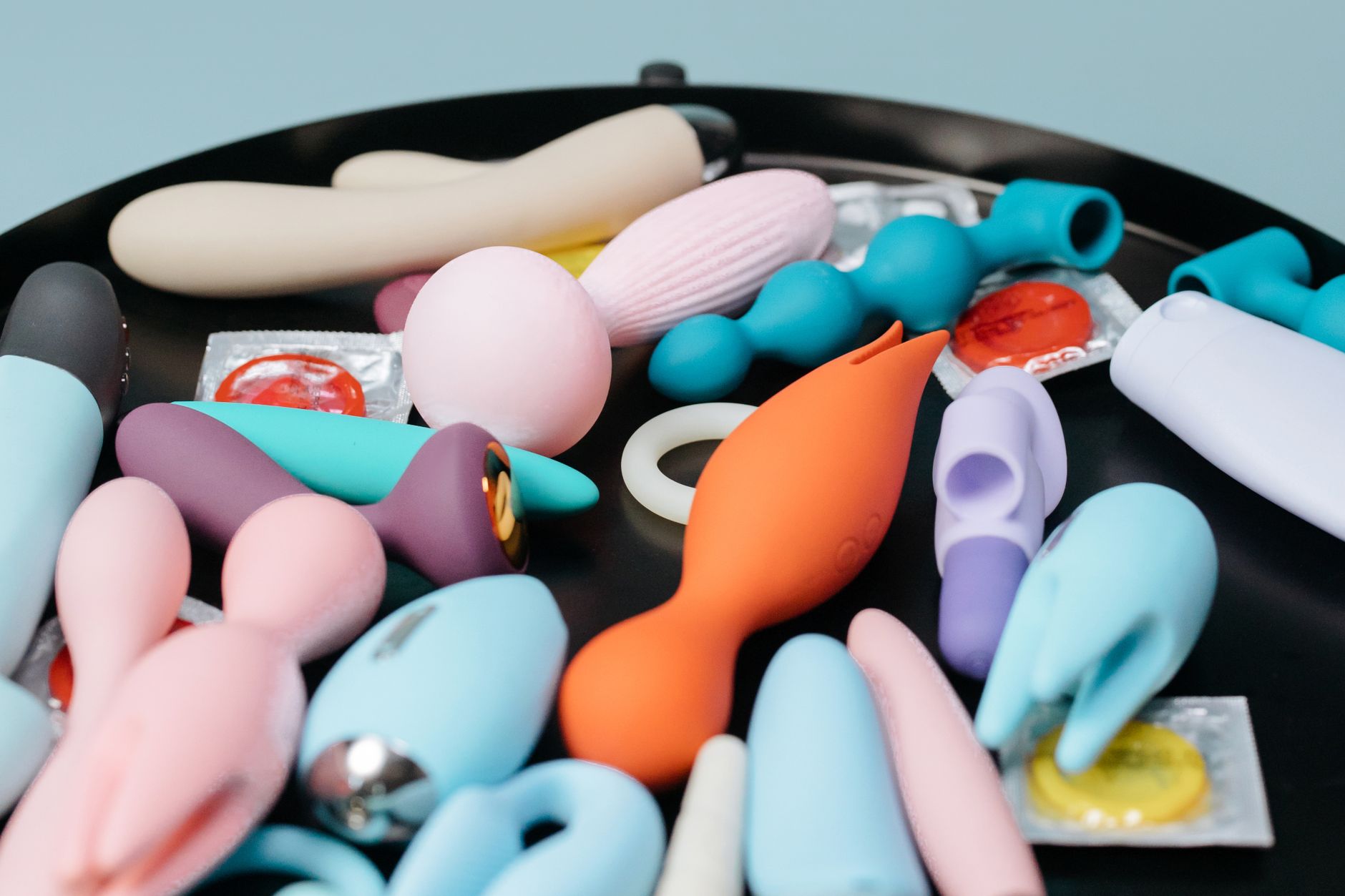
Why Lemon Vibrators Feel Different When Your Partner Isn't in the Mood
Here's the thing about desire mismatch: it doesn't mean your relationship is broken. It means you're both human, with different bodies, stress loads, and libidos that don't always sync up. But that doesn't make the frustration any less real, or the pressure on your own pleasure any lighter.
When your partner isn't in the mood and you are, something strange happens. Your body's arousal response shifts. The ease you normally feel evaporates. And somehow, reaching for a lemon clitoral vibrator in that moment feels loaded with meaning it shouldn't have to carry. Let's talk about what's actually going on, and what changes when you decide to prioritize your own pleasure anyway.
The neuroscience of arousal when desire doesn't match
Your brain is a prediction machine. It anticipates partnership, connection, shared pleasure. When those signals aren't coming, your nervous system downregulates. Your parasympathetic nervous system (the "relax and digest" branch) doesn't fully activate because part of your brain is still in a low-level stress state: Is my partner okay? Are they pulling away? Is this normal?
This isn't psychology. This is neurology. When you feel emotionally safe and anticipated, your vagus nerve sends signals to relax the pelvic floor, increase blood flow to erogenous tissue, and prepare for arousal. When you feel ambient rejection (even mild, even unspoken), those signals slow down. Lubrication takes longer. Arousal takes longer. The whole chain reaction stalls.
What's interesting is that lemon vibrators actually bypass some of that hesitation. The suction and vibration patterns activate sensory neurons directly, which can override the brain's anxious predictions. But there's a catch: that only works if you give yourself permission to feel pleasure independently.
Why solo pleasure feels like a statement when it shouldn't
In relationships with mismatched desire, using a vibrator can feel loaded. Like you're either punishing your partner for not being interested, or you're admitting defeat, or you're shutting them out. None of that is true. But the feeling is there anyway.
I've worked with hundreds of couples where one partner has higher libido than the other. The pattern is almost always the same: the higher-desire partner stops touching themselves during the relationship because it feels like betrayal. They wait. They push through. They eventually resent their partner for "making" them give up their own pleasure.
That resentment is the real problem. Not the vibrator. Not even the desire mismatch itself.
When you use a lemon vibrator (or any clitoral vibrator) while your partner isn't interested, you're actually sending a signal to your own nervous system and to your relationship: "My pleasure matters. It doesn't have to be contingent on yours." That's profoundly healthy. It's also profoundly threatening to partners who've built their security around being the source of your pleasure.
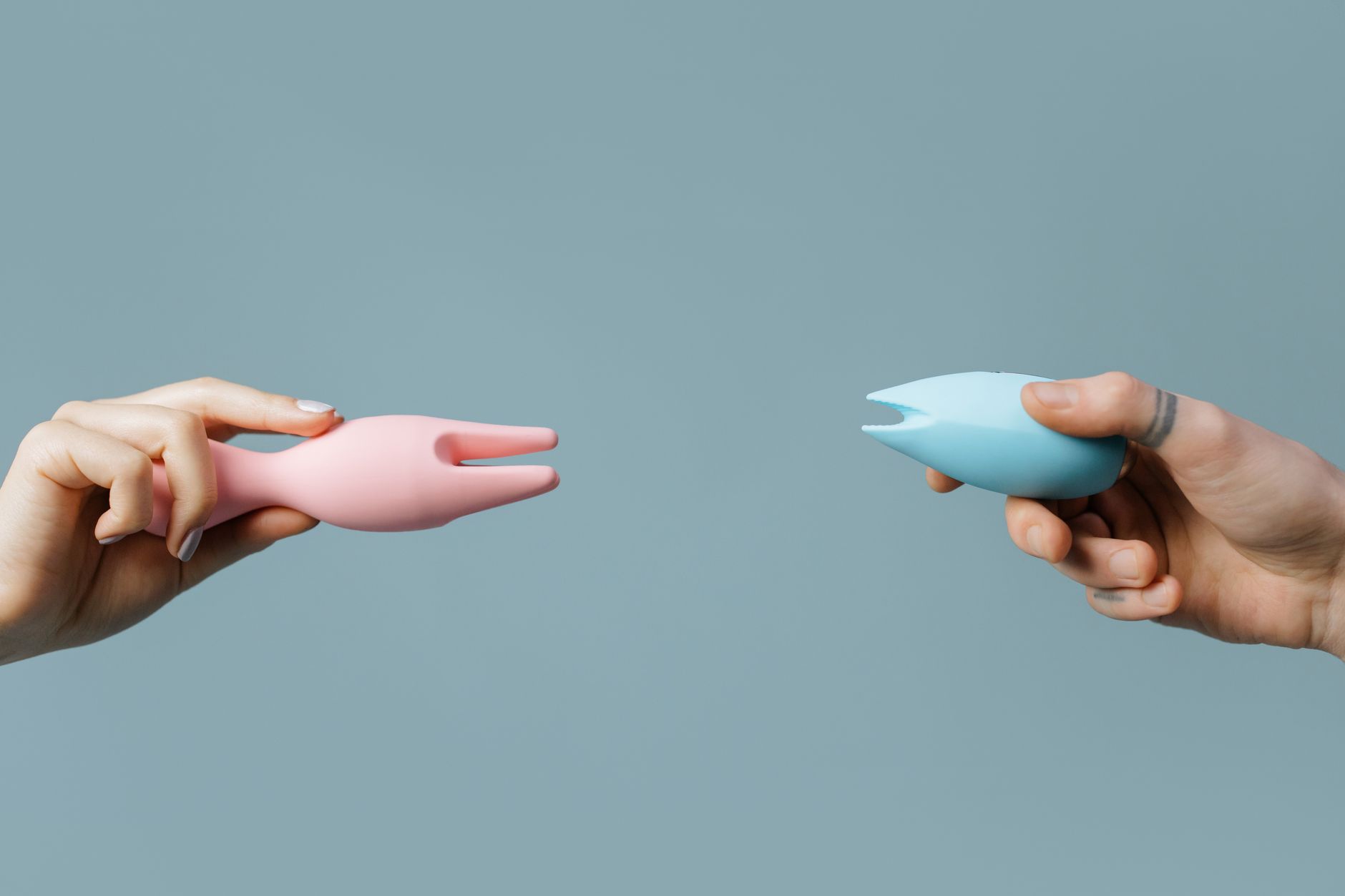
Photo by cottonbro studio on Pexels
What changes physically when you reclaim that permission
The moment you stop asking implicit permission (either from your partner or from your own internal critic), your physiology shifts. Your breathing deepens. Your pelvic floor relaxes. Blood flow increases. The lemon vibrator you're holding suddenly feels more responsive because you're actually present in your body instead of half-monitoring your partner's emotional reaction.
This is also why lemon vibrators often feel more intense for people in desire-mismatched relationships once they get past the guilt. You're not splitting your attention anymore. You're fully in your own nervous system, not half-lodged in someone else's.
The suction and pulsing patterns of a lemon vibrator are particularly useful here because they don't require the same kind of ongoing mental calculation that penetration does. You're not thinking about whether your partner finds this attractive or whether you're taking too long. You can just feel it.
The three scenarios that change how vibrators work
When your partner isn't in the room. This is neurologically the easiest path. Your brain isn't monitoring for their reaction. You can fully activate your parasympathetic nervous system. Arousal builds faster. Orgasms often feel more powerful because there's no ambient anxiety.
When your partner is present but not participating. This is the complicated one. Some people find it deeply connecting to be watched during solo pleasure. Others feel performance pressure that blocks arousal entirely. There's no right answer here, but it's worth knowing which one you are. If being watched activates your nervous system in a good way, you might find that a lemon clitoral vibrator feels more intense with them present. If it triggers self-consciousness, you might need privacy to access the same pleasure.
When your partner wants to participate differently. This is where things get interesting for desire-mismatched couples. Your partner might not want to be touched, but they might be happy to hold the vibrator while you relax into it. Or to touch you everywhere except where you're using the vibrator. Small shifts in how shared pleasure happens can keep both of you engaged without forcing desire.
Why this matters for the long term
Couples with mismatched libido have a choice: they can let unspoken resentment build, or they can deliberately separate "partner wants to have sex with me" from "I deserve pleasure." Those are two different conversations. The second one doesn't require your partner's cooperation.
When you reach for a lemon vibrator instead of waiting, you're not rejecting your partner. You're protecting your sexual health. Regular orgasms (alone, with a toy, however you access them) improve blood flow to genital tissue, maintain neural pathways for arousal, and keep your pelvic floor flexible. They're not optional extras. They're part of your baseline physical health.
This reframe changes everything. It's not about punishment or defiance. It's about maintenance.
When to talk about it, and what to say
If you're in a relationship where desire doesn't match, your partner probably already knows. The silence around it is usually louder than any conversation would be. Starting the conversation is simpler than you think, and it doesn't have to reference the vibrator at all.
Try: "I've been realizing I've stopped touching myself as much since we got together, and I think that's been a shift I'm not happy with. Not because of you. But for me. I want to make sure I'm still taking care of my own pleasure, independent of what we do together."
That's it. No accusation. No expectation. Just a clear statement of what you're about to do. If your partner reacts poorly, that's information worth paying attention to. That reaction is about their insecurity, not about your selfishness.
For partners who are lower-desire: understanding that your partner's self-pleasure isn't a referendum on you can be genuinely liberating. It removes the pressure to perform. It means they're not resentful. It actually protects the relationship.
The role of a lemon clitoral vibrator in this equation
A lemon vibrator (or any high-quality clitoral vibrator) is particularly useful for solo pleasure in desire-mismatched situations because the orgasms tend to be faster and more intense than other methods. That efficiency matters when you're trying to protect your pleasure without making your partner's discomfort about them. You're not taking 45 minutes and making a whole production. You're taking 10, feeling genuinely good, and moving on.
The suction patterns also tend to feel less "clinical" than traditional vibration, which can help if you're carrying any shame around the act. A lemon sucker feels more sensual, less medical. That matters for your psychology.
People also ask
Does using a vibrator when my partner isn't interested count as infidelity?
No. Infidelity involves betrayal and deception. Using a toy for your own pleasure while single (or in a monogamous relationship) is self-care. The only time it becomes infidelity is if you've explicitly agreed with your partner that it would be, which is rare and worth questioning if that's the rule you're living under. Your body isn't a loan that belongs to your partner.
Will my partner feel threatened if I use a lemon vibrator?
Some will, initially. That's usually about insecurity ("Does the toy feel better than me?") rather than about the vibrator itself. The answer is: no, the toy doesn't feel better, it feels different. But the real question underneath is: "Do I still matter?" And that's a conversation worth having separately from the vibrator question. Reassurance might help in the moment, but long-term, your partner needs to understand that your pleasure isn't a zero-sum game.
Can using a vibrator alone actually help my relationship?
Yes. When one partner uses a vibrator independently, it removes pressure from the other partner to be the sole source of their pleasure. It reduces resentment. It means you're not storing up frustration for future arguments. It also means you're modeling that pleasure matters, which often shifts how both of you approach intimacy. Couples who can separate "partner and I have sex" from "I take care of my own pleasure" tend to have longer, healthier relationships.
How do I ask my partner to be okay with this?
Don't ask for permission. Announce it as fact: "I'm going to be touching myself more, independent of us. I'm not looking for approval, just letting you know so there's no confusion." Then do it. The most powerful thing a lower-desire partner can hear is that their partner's pleasure doesn't hinge on them. It actually reduces pressure significantly. Couples therapists call this "differentiation," and it's foundational to healthy partnerships.
Will a lemon vibrator damage my ability to orgasm with my partner?
Not if you use it in isolation from your partner. The concern usually stems from something called "vibrator dependency," which is rare and mostly a myth. What actually happens is that you build a strong neural pathway to orgasm, which makes it easier, not harder. Some people find they orgasm more easily with partners after reclaiming solo pleasure because they're not overthinking it. That said, if you're using a vibrator during partnered sex and struggling without it, that's worth examining with a sex therapist.
What if my partner watches while I use a lemon vibrator?
That depends entirely on what feels good to you. Some people find being watched intensely arousing (it activates exhibitionist neural pathways). Others find it paralyzing because they're monitoring their partner's reaction instead of their own sensation. Neither is wrong. You need to know which one you are, and communicate that clearly. "I need privacy for this" or "I'd love if you watched" are both valid. The vibrator will feel entirely different depending on which context you're in.
The bottom line
When desire mismatches, a lemon vibrator isn't a replacement for your partner or a band-aid for a broken relationship. It's a tool for preserving your own sexual health and removing the pressure that kills desire-mismatched relationships slowly. Using one when your partner isn't in the mood is an act of self-respect, not selfishness.
Your pleasure matters independently. That's not a threat to your relationship. It's a foundation for it.
If you're navigating desire mismatch and want to explore how to communicate about it more deeply, reach out. These conversations are worth having with support.