Here's the thing about different preferences
One of you wants penetration. The other wants external clitoral stimulation. One person feels rejected. The other feels pressured. Neither of you is wrong, and this deadlock is way more common than most couples admit.
The good news? A lemon vibrator doesn't pick sides. It solves the actual problem, which isn't your preferences. It's that you've been treating them as mutually exclusive when they're not.
Why this mismatch happens in the first place
Let's separate biology from psychology here. Some people reach orgasm reliably through penetration. Others need direct clitoral stimulation and penetration alone won't get them there, no matter how much either partner wants it to. That's not a deficiency or a preference luxury. That's neurology.
But the emotional layer is real too. A partner who loves penetration sometimes interprets your need for clitoral play as rejection of them. They wonder if they're doing it wrong, if you don't want them enough, or if something's missing in the dynamic. On the flip side, if you're the one who needs external stimulation, you might feel selfish asking for it, like your pleasure should just happen the way your partner's does.
Both feelings make sense. Both are obstacles to actually getting what you want.
How a lemon vibrator changes the equation
A clitoral vibrator like the Lemon does something neither of you alone can do. It stimulates the clitoris directly and consistently while your partner is doing whatever they want to do.
This matters because it removes the false choice. Your partner doesn't have to choose between penetrating you and getting you to orgasm. They can do both. You don't have to choose between what your partner wants and what your body actually needs. You can have both.
The suction design of a lemon clitoral vibrator is particularly useful here because it works independently of position or penetration depth. It stays in place, which means your partner can focus on their own pleasure and sensation without constantly adjusting angles or depth to try to hit the right spot.
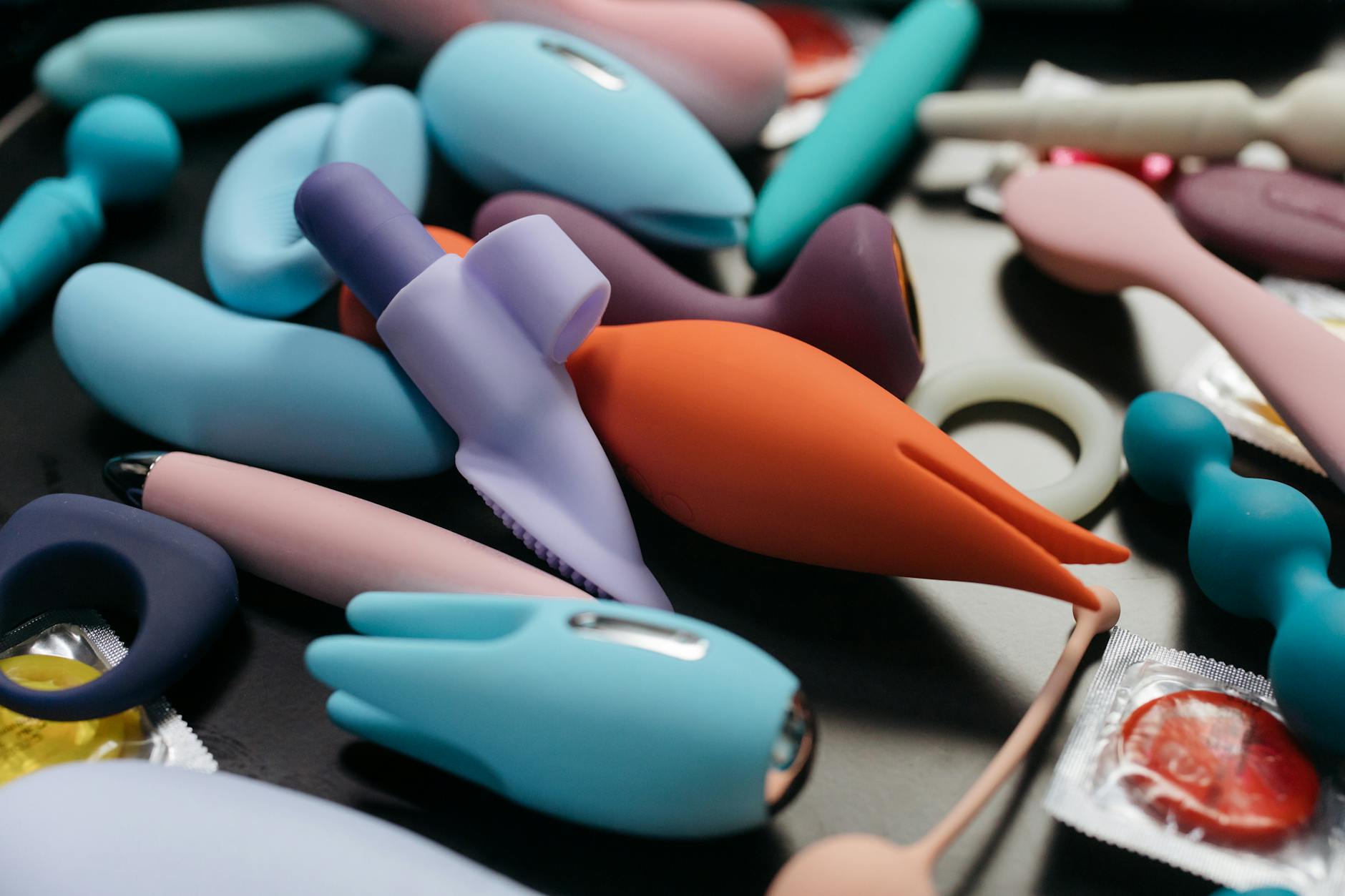
Photo by cottonbro studio on Pexels
The logistics that actually work
Here's how to set this up so it doesn't feel clinical or like someone's settling.
Position first. Not all positions work equally well for external stimulation plus penetration. Woman-on-top or reclined positions give you better access to hold the vibrator and better control over depth. Side-by-side works too. Avoid positions where your partner's body weight or thrusting angle would physically knock the vibrator away.
Warm up first. Start with the vibrator on lower patterns (we're talking setting 1 or 2 on a Lem) before penetration begins. Build arousal through external stimulation for 10 to 15 minutes. This gives your clitoris time to engorge and become more responsive, and it takes the pressure off your partner to somehow create arousal through penetration alone.
Introduce penetration when you're ready. This is not a simultaneous-from-the-start situation. Let your partner know when you want them to enter. Keep the vibrator going at the same pattern. If it feels good to increase intensity once they're inside, you can, but you don't have to.
Communication during matters as much as setup. "Slower" or "stay still for a second" should be easier to say mid-sex than they usually are. If they're not, that's a relationship issue worth addressing separately.
What changes when you add a vibrator
Your partner might worry they're redundant or that you'd rather just have the toy. That's not how bodies work. Penetration provides fullness, pressure, rhythm, and psychological intensity that a vibrator doesn't. The vibrator provides the specific clitoral stimulation that penetration alone typically doesn't. Together, they create sensations neither provides alone.
Many people report that orgasms during partnered sex with a clitoral vibrator feel more intense and come faster than either penetration alone or external stimulation alone would. That's not a bug. That's the point.
The emotional part that fixes the dynamic
Here's what I see happen in my practice: couples try a vibrator, it works, and suddenly they both relax. The partner who loves penetration feels like they're still participating in your pleasure instead of watching you fail to orgasm from something that was supposed to work. You feel like your body is normal instead of broken. Nobody's compromising. Nobody's settling.
That shift is huge. It moves the conversation from "how do we make your body work the way my body works" to "how do we both get what actually works for us."
If your partner is resistant to the vibrator, how to use lemon vibrators with your partner when you're too shy to ask walks through that conversation specifically. Sometimes resistance isn't about the vibrator at all. Sometimes it's about something else worth uncovering.
Practical tips for comfort and flow
Water-based lube on the vibrator head helps it glide and stay in contact even during movement. Silicone lube is richer but don't mix it with silicone toys.
Start with lower intensity. You can always turn it up. Starting high makes it harder to dial back without awkwardness.
If your partner gets tired, you can take over. The vibrator doesn't care who's holding it. This isn't a performance where someone has to maintain effort throughout. It's collaboration.
Keep the vibrator at the angle and pressure that feels best for you. Your partner doesn't need to adjust it. That's your job. This clarity prevents the weird dance where both people are trying to position something and nobody's satisfied.
When mismatched desire becomes something bigger
Sometimes penetration-preference mismatch isn't the real problem. Sometimes it's a symptom of partners having mismatched desire levels more broadly, or of one person feeling emotionally disconnected. A vibrator solves the logistics of different preferences. It doesn't solve resentment or emotional distance.
If adding a vibrator helps bridge the gap and sex becomes something you both enjoy again, that's the marker that this was a mechanics problem, not a relationship problem.
If the vibrator helps with pleasure but the emotional distance stays, that's worth exploring with someone trained in couples work.
FAQ
Can a lemon clitoral vibrator really satisfy both partners at once?
Yes, when the goal is mutual pleasure rather than simultaneous orgasm. The vibrator stimulates the clitoris while your partner experiences penetration. Both people are getting what they actually need rather than trying to force one person's body to respond to something it won't. That's the definition of satisfaction.
What if my partner feels replaced or less important?
Talk about what the vibrator is actually doing. It's not replacing them. It's enabling penetration to happen while clitoral stimulation also happens. Reframe it as a tool that lets both people get what they want instead of one person sacrificing. If that framing doesn't help and your partner still feels threatened, that's worth a deeper conversation about what the resistance is really about.
How do I know what intensity setting to use during penetration?
Start lower than you think you need. Penetration plus vibration feels more intense than either alone, so settings you might use solo might be too much with a partner inside you. Begin at pattern 1 or 2 and increase if it feels right. Your body will tell you.
What if the vibrator slips or loses contact during sex?
That's usually a positioning issue, not a vibrator issue. Woman-on-top or reclined positions keep the vibrator more accessible and less likely to shift. If you're in a position where contact is hard to maintain, switch positions. The vibrator should enhance the experience, not create new friction.
Can I use a lemon vibrator if I have sensitive skin?
Absolutely. Lemon vibrators with suction stimulation tend to feel gentler than direct vibration on sensitive tissue. Start at lower patterns and use good lubrication. If intense vibration makes you uncomfortable, the softer sensation of suction might actually work better for you than what your partner was trying to provide through penetration alone.
How do I bring this up without making my partner feel inadequate?
Frame it as something that helps you, not something that fixes what they're doing wrong. "I've noticed that I come faster with direct clitoral stimulation. I want to try using a vibrator so we can both get what we need" is honest and collaborative. Avoid "you don't touch me the right way" or "this will make me actually orgasm." Both of those wound. The first approach opens the door.
The bigger picture
Mismatched preferences about penetration versus external stimulation aren't a failure of compatibility. They're one of the most common variations in how different bodies work. Every couple navigates this eventually.
A lemon vibrator isn't a band-aid. It's an acknowledgment that your pleasure matters as much as your partner's does, and that both of you deserve to experience what actually works instead of performing what you think should work.
When that happens, sex gets better for both of you. Not because the vibrator is magic. Because you both finally stopped compromising.